
In this article
- Why your content strategy decides your app’s success
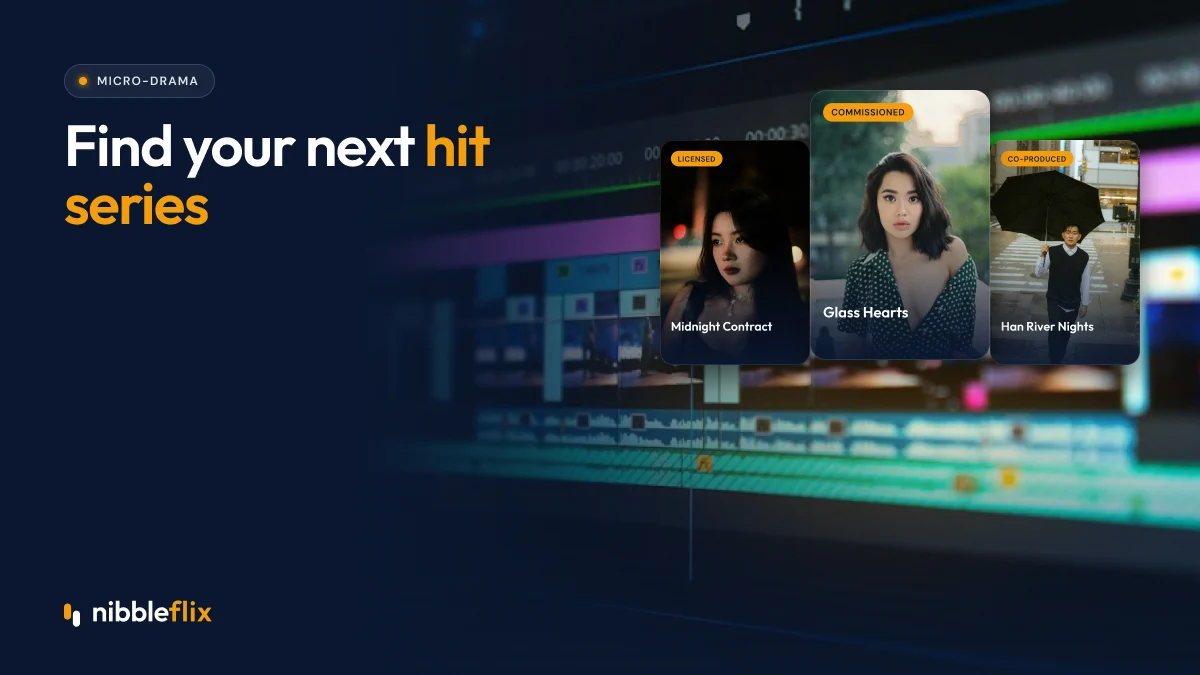
- Option 1: Micro drama content licensing
- Pros
- Cons
- Option 2: Commissioning original series
- How to produce micro drama series efficiently
- Option 3: Co-production
- Comparing your options
- What to put in a micro-drama license agreement
- Getting more value from every series
- Building your launch slate
- Key takeaways
- Frequently asked questions
- Where can I license micro-drama content?
- Is it better to license or produce micro dramas?
- What should a micro drama license agreement include?
- How many series do I need to launch a short drama app?
Every micro-drama app needs a steady supply of series, and content is usually the largest line in the budget. Micro drama content licensing, commissioning and co-production are the three ways to fill your catalog, and most successful apps use all three.
Short answer: you can get micro-drama content by licensing finished vertical series from producers and distributors, commissioning original series from studios, or co-producing with partners who share cost and rights. Licensing is fastest, commissioning gives you exclusive IP, and co-production balances cost and control.
This guide compares the three routes, explains what to put in your contracts, and shows how to build a slate that keeps viewers coming back.
Why your content strategy decides your app’s success
In micro-drama, viewers follow stories, not brands. A great player and smart coin pricing cannot save a thin or generic catalog. You need enough series to keep bingers busy, a weekly flow of new releases, and titles that feel made for your audience.
Regional demand makes local content more valuable. Sensor Tower reports that Southeast Asia accounted for 32% and Latin America 23% of short drama app downloads in Q1 2026, both growing at triple-digit rates. Those viewers respond best to stories in their own language, with familiar faces and settings.
Option 1: Micro drama content licensing
Licensing means paying for the right to stream finished series made by someone else, for a set territory and period.
Pros
- Fastest way to build a launch catalog.
- Lower upfront cost than production.
- Proven titles with known performance in other markets.
Cons
- Often non-exclusive, so competitors may carry the same shows.
- Limited control over story, casting and length.
- Content from other markets may need subtitles or dubbing to land with local viewers.
When you license vertical dramas, look for producers and distributors who specialize in short-form series, and ask for performance data from other platforms where available.
Option 2: Commissioning original series
Commissioning means paying a studio or production company to produce series for you, usually with you owning or controlling the rights.
- Exclusive IP: the show exists only on your app, which helps marketing and retention.
- Local fit: language, actors, locations and humor tuned for your audience.
- Long-term value: you can license the series to other territories later.
The trade-off is cost and time. You also take the creative risk. Start with a few series in proven genres such as romance, revenge and family drama, then expand based on data.
How to produce micro drama series efficiently
- Write the full series before shooting so every episode ends on a hook.
- Shoot many episodes in a short, tight production block with a small crew.
- Frame everything for 9:16 from the start rather than cropping horizontal footage.
- Keep episodes to one to three minutes with conflict in the first seconds.
Option 3: Co-production
Co-production splits cost, work and rights between partners. A common setup pairs an app owner who brings distribution and marketing with a studio or broadcaster that brings talent, facilities or existing IP.
This works well for broadcasters turning formats into vertical spin-offs, for book publishers adapting romance novels, and for cross-border deals, such as a Korean studio and a Latin American platform producing a localized version of the same story.
Comparing your options
| Factor | Licensing | Commissioning | Co-production |
|---|---|---|---|
| Speed to catalog | Fast | Slow | Medium |
| Upfront cost | Low to medium | High | Shared |
| Exclusivity | Often non-exclusive | Exclusive | Negotiated |
| Creative control | Low | High | Shared |
| IP ownership | Licensor keeps it | Usually yours | Split by agreement |
What to put in a micro-drama license agreement
- Territory: which countries you can stream in.
- Term: how long you hold the rights.
- Exclusivity: exclusive, non-exclusive or exclusive for a window.
- Platforms: mobile apps, web and TV apps.
- Monetization rights: coins, subscriptions and ads all allowed.
- Localization: the right to add subtitles and dubbing.
- Marketing rights: clips and trailers for paid social campaigns.
- Payment model: flat fee, revenue share, or minimum guarantee plus revenue share.
Revenue share deals lower your upfront risk but require transparent reporting. A dashboard that shows earnings per series makes these partnerships easier to run, because both sides can see what each title actually brings in. Minimum guarantees suit proven titles, while pure revenue share works better for new producers who want distribution.
Always confirm music and talent rights are cleared for streaming and advertising in your territories.
Getting more value from every series
Once you hold the content, the right tools multiply its reach. On NibbleFlix, AI subtitles in 12 languages and AI dubbing let one series serve several markets, AI metadata generation speeds up cataloging, and AI trailer generation creates a promo in about two minutes. Learn more on our AI streaming page.
The NibbleFlix CMS lets you upload episodes, set prices and schedule weekly releases without code, so new content reaches viewers on time.
Building your launch slate
For launch, many operators combine 20 to 40 licensed series with a handful of originals. Licensed titles fill the catalog quickly, while originals give marketing a reason to talk about your app. Then add new series every week. For the full launch sequence, read how to start a micro drama app, or see our micro-drama solution.
Key takeaways
- Micro drama content licensing is the fastest way to fill a catalog.
- Commissioned originals give exclusivity and local fit at higher cost.
- Co-production shares cost and rights with studios, broadcasters or publishers.
- Contracts should cover territory, term, exclusivity, platforms, monetization and localization.
- AI subtitles and dubbing help one series earn in several markets.
Planning your content slate and app together? Book a demo and we will show you how content flows from upload to unlock.
Frequently asked questions
Where can I license micro-drama content?
Look for producers and distributors that specialize in short-form vertical series, as well as studios that have adapted their catalogs to 9:16. Ask for performance data from other platforms, check which territories are available, and confirm you can add subtitles, dubbing and marketing clips before you sign.
Is it better to license or produce micro dramas?
Most apps do both. Licensing builds a launch catalog quickly at lower cost, while commissioned originals give you exclusive stories made for your audience and IP you can relicense later. Start with licensed titles plus a few originals, then shift your mix based on what viewers watch and buy.
What should a micro drama license agreement include?
Cover territory, term, exclusivity, the platforms you can stream on, which monetization models are allowed, localization rights for subtitles and dubbing, and marketing rights for clips and trailers. Agree the payment model clearly, whether flat fee, revenue share, or a minimum guarantee plus revenue share.
How many series do I need to launch a short drama app?
A practical target is 20 to 40 complete series at launch, each with dozens of short episodes, plus a plan to add new series every week. That gives bingers enough to watch, lets you test genres and pricing, and gives returning viewers a reason to open the app again.