
In this article
- What each model actually is
- Micro-drama
- Traditional OTT
- Micro drama vs OTT: side-by-side comparison
- Short form vs long form streaming: audience behavior
- Micro drama business model
- OTT business model comparison
- Micro drama vs OTT: which model fits your business?
- Choose micro-drama if
- Choose traditional OTT if
- Consider running both
- Launching either model without a tech team
- Key takeaways
- Frequently asked questions
- Is micro-drama replacing traditional OTT?
- Which model is cheaper to start, micro drama or OTT?
- Can I repurpose long-form content as micro-drama?
- Can one company run both a micro-drama app and an OTT app?
If you own content or plan a streaming business, the first big decision is the format. Micro drama vs OTT is really a choice between two different products: short vertical episodes sold one unlock at a time, or a library of long-form shows and films sold through subscriptions, ads or rentals.
The direct answer: choose micro-drama if you can produce or license fast-paced serialized stories and want revenue from impulse purchases on phones; choose traditional OTT if you own a deep long-form catalog and your viewers watch on TVs and want a monthly plan.
Below we compare the two models on content, cost, monetization, devices and audience, so you can decide which fits your business, or whether you should run both.
What each model actually is
Micro-drama
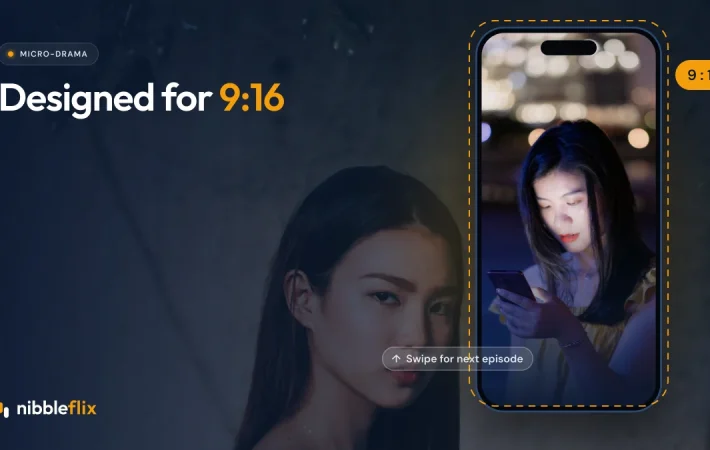
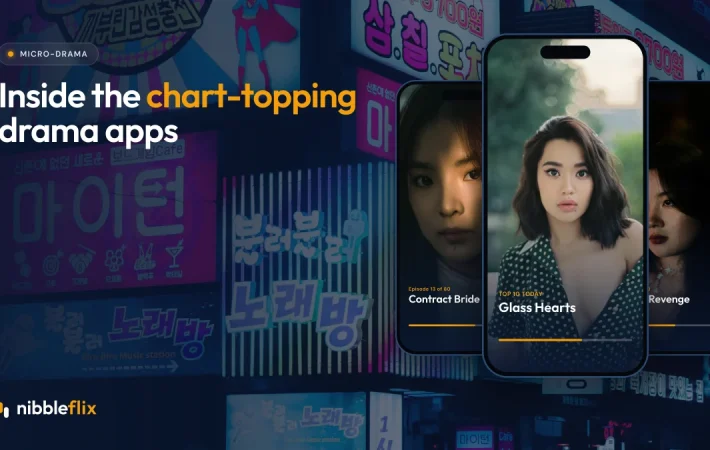
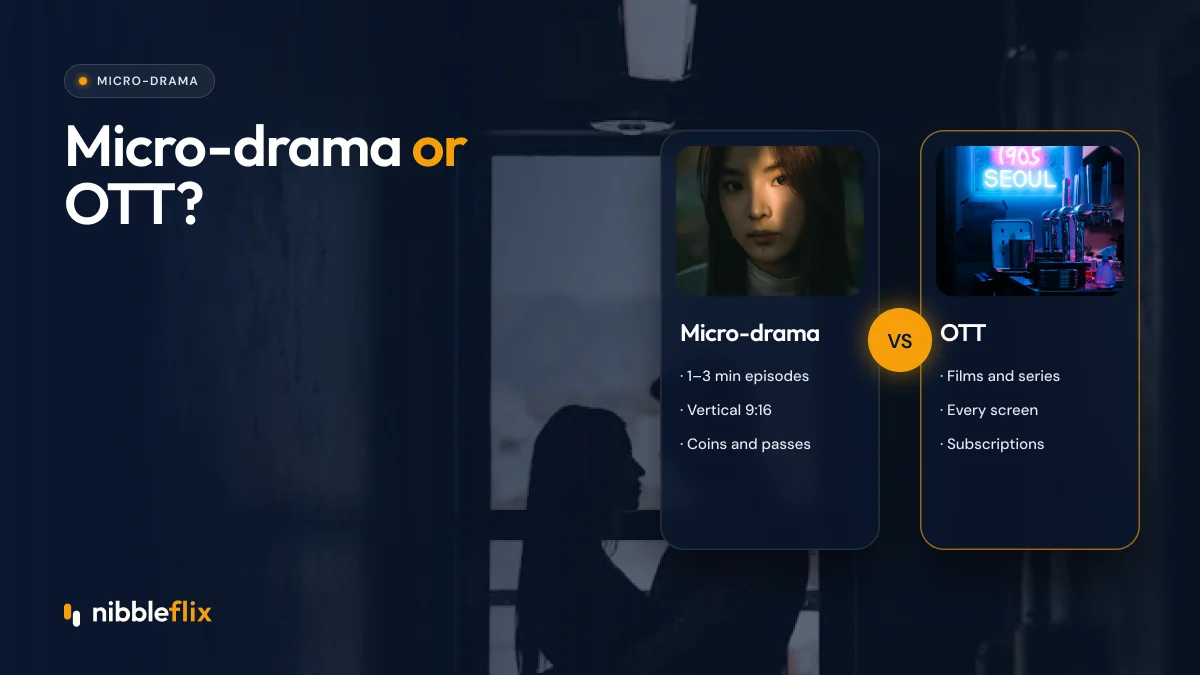
Micro-dramas are scripted series cut into episodes of one to three minutes, shot vertically in 9:16 for phones. Each episode ends on a cliffhanger. Viewers swipe from one episode to the next, watch the first few free, then pay with coins, a VIP pass or by watching an ad to continue.
Traditional OTT
Traditional OTT (over-the-top) streaming delivers films, series, documentaries, sport or kids content over the internet to phones, web and smart TVs. Episodes run 20 to 60 minutes or more, are usually horizontal, and are sold through subscriptions (SVOD), advertising (AVOD), rentals (TVOD) or a hybrid.
Micro drama vs OTT: side-by-side comparison
| Factor | Micro-drama | Traditional OTT |
|---|---|---|
| Episode length | 1 to 3 minutes | 20 to 120 minutes |
| Orientation | Vertical 9:16 | Horizontal 16:9 |
| Main device | Smartphone | Smart TV, web, mobile |
| Typical pricing | Coins, VIP pass, pay-per-episode, ad unlocks | Monthly or annual subscription, ads, rentals |
| Purchase style | Impulse, many small payments | Planned, recurring commitment |
| Content cost per title | Lower, short shoots | Higher, longer production or licensing |
| Release rhythm | Daily or weekly drops | Seasons, catalog refreshes |
Short form vs long form streaming: audience behavior
The two formats fit different moments. Short form fills commutes, queues and breaks. Long form fills evenings on the sofa. Both are growing, and they compete less than you might expect.
Sensor Tower’s 2026 short drama report found that average daily time in short drama apps reached 25 minutes by April 2026, up 85% from January 2025, while time in OTT apps stayed flat at about 35 minutes. Short drama is closing the gap without taking the sofa away from long-form services.
The big streamers have noticed. Apptopia reports that Disney+ launched Verts in March 2026, Netflix launched Clips on April 30, 2026, and Prime Video added Clips in May 2026. Vertical, short content is now a standard part of streaming, not a side experiment.
Micro drama business model
The micro drama business model is built on conversion inside the story. You give away the hook, then charge at the moment of highest tension. A typical flow:
- Free episodes 1 to 10 to build attachment.
- Paywall at a cliffhanger, with options to buy coins, start a VIP pass or watch an ad.
- Daily check-in rewards and push alerts for new episodes to drive return visits.
- Promotional offers for lapsed viewers.
Revenue comes from many small transactions, so the levers are conversion rate, price per episode and retention. Read how micro-drama apps make money from 2-minute episodes for a full breakdown.
OTT business model comparison
Traditional OTT earns most of its money from recurring relationships. The main questions are how many subscribers you can win, how long they stay, and how much ad inventory you can sell to the people who do not pay.
- SVOD: predictable monthly revenue, but you must keep adding content to fight churn.
- AVOD: free to the viewer, earns through ad impressions, needs scale.
- TVOD: rent or buy individual titles, good for premieres and films.
- Hybrid: combine tiers, such as a free ad tier plus a premium plan.
OTT also needs a wider device footprint. Viewers expect to find you on Apple TV, Android TV, Amazon Fire TV, Roku, Samsung and LG as well as mobile and web. See the full list of supported devices.
Micro drama vs OTT: which model fits your business?
Choose micro-drama if
- You can write, produce or license serialized stories with strong hooks.
- Your audience is mobile-first, for example in Southeast Asia, Latin America or MENA.
- You want fast feedback: publish a series, see conversion within days, iterate.
Choose traditional OTT if
- You own a library of films, series, sport or educational content.
- Your viewers watch at home on connected TVs.
- You want subscription revenue and a brand built around a niche or genre.
Consider running both
Many content owners now do both: a long-form OTT app for the core catalog and a vertical micro-drama app that cuts trailers, spin-offs or originals for mobile. Short series can also act as marketing for long-form titles. Running both from one admin dashboard keeps uploads, pricing and earnings in one place.
Launching either model without a tech team
The build effort no longer has to decide the format for you. With NibbleFlix you can launch a branded micro-drama app with a vertical 9:16 player and swipe navigation, or a full entertainment OTT service with smart TV apps, on the same platform. Both are fully white-label, with store listings under your name, your viewer data and your revenue.
The process takes about seven days from sign-up to App Store and Google Play submission, with no code needed and launch support included. If you are weighing monetization options for OTT, our guide to SVOD, AVOD, TVOD and hybrid models goes deeper.
Key takeaways
- Micro-drama sells short vertical episodes through coins, VIP passes and ad unlocks on phones.
- Traditional OTT sells long-form libraries through subscriptions, ads and rentals across TVs and devices.
- Short drama viewing time is rising while OTT time stays flat, and major streamers now offer vertical clips.
- Your content library and audience habits should decide the model.
- Running both from one platform is a realistic option for content owners.
Not sure which model fits your catalog? Book a demo and we will map your content to the right format.
Frequently asked questions
Is micro-drama replacing traditional OTT?
No. Data shows short drama viewing time growing while OTT time stays roughly flat, which suggests the formats serve different moments. Major streamers adding vertical clip features shows they see short form as an addition to long form. For most businesses, the formats complement each other rather than compete.
Which model is cheaper to start, micro drama or OTT?
Micro-drama content is usually cheaper per title because shoots are short and vertical. Traditional OTT often needs larger licensing budgets and more device apps. Platform costs can be similar when you use a white-label service, so content strategy tends to drive the real difference in budget.
Can I repurpose long-form content as micro-drama?
Partly. You can cut trailers, recaps and short spin-offs from long-form series, but true micro-dramas are written with a cliffhanger every minute or two. Repurposed clips work best as marketing that drives viewers to your OTT app, while original vertical series work best for paid episodes.
Can one company run both a micro-drama app and an OTT app?
Yes. On NibbleFlix both models run on one platform, managed from a single admin dashboard. You can upload content, set prices and see earnings for each app in one place, while each app keeps its own branding, store listing and monetization rules.