
In this article
- Micro drama Latin America: the numbers behind the boom
- Why now: four forces driving short drama apps in LATAM
- 1. A melodrama culture
- 2. Mobile-first viewing
- 3. Flexible ways to pay
- 4. Content gaps
- Vertical dramas in Brazil and Mexico: two different markets
- How to win: a playbook for a streaming app in Latin America
- Risks to plan for
- Opportunities for broadcasters and studios
- Key takeaways
- Frequently asked questions
- Why are micro dramas so popular in Latin America?
- Should a LATAM short drama app launch in Spanish or Portuguese?
- How should I price a micro drama app in Latin America?
- Can telenovela producers launch their own micro drama app?
The micro drama Latin America story is one of the fastest growth stories in streaming. Viewers who grew up on telenovelas are now binging one-to-three-minute vertical episodes on their phones, and local producers and platforms have a real opening.
Short answer: micro-drama is booming in Latin America because it combines the region’s love of melodrama with mobile-first viewing and low-cost access, and the winners will be those who offer local stories in Spanish and Portuguese with pricing built for local wallets.
This article looks at the numbers, why the timing is right, and a practical playbook for launching short drama apps in LATAM.
Micro drama Latin America: the numbers behind the boom
Growth in the region has been exceptional. According to Adjust data reported by PPC Land, short drama app installs in Latin America rose 913% year over year in Q1 2026, and short drama accounted for nearly 16% of LATAM video entertainment time in Q4 2025.
Latin America is also a major share of global demand. Sensor Tower reports that the region made up 23% of short drama app downloads in Q1 2026, with triple-digit year-over-year growth.
Viewers stay, too. The same Adjust data shows LATAM short drama retention at 20% on day 1 and 4% on day 30, compared with 15% and 2% globally. Latin American audiences are not just trying these apps; they are sticking with them.
Why now: four forces driving short drama apps in LATAM
1. A melodrama culture
The telenovela is one of Latin America’s great cultural exports. Forbidden love, family secrets, revenge and sudden reversals are the same building blocks that make micro-dramas work. The telenovela short format is a natural evolution, not a foreign import.
2. Mobile-first viewing
Across Brazil, Mexico, Colombia and Argentina, the phone is the main screen for many viewers. Short vertical episodes fit commutes, breaks and evenings in a way that long series do not.
3. Flexible ways to pay
Coins, small packs and ad unlocks let viewers spend a little at a time, or nothing at all. That suits markets where monthly subscriptions compete with many other household costs.
4. Content gaps
Much of the early supply was translated or dubbed from other markets. Viewers increasingly want stories with local actors, slang and settings, which leaves room for regional studios and platforms.
Vertical dramas in Brazil and Mexico: two different markets
LATAM is not one market. The two largest need separate thinking.
| Factor | Brazil | Mexico and Spanish-speaking LATAM |
|---|---|---|
| Language | Brazilian Portuguese | Spanish, with regional accents and slang |
| Content approach | Local originals and Portuguese dubbing | Shared Spanish catalog across many countries |
| Genres to test | Romance, family drama, faith-based stories | Telenovela-style romance, revenge, crime |
| Payments | Local payment habits differ from card-first markets | Mix of cards, store billing and ad unlocks |
| Promotion moments | Carnival, end-of-year holidays | Día de Muertos, Christmas season, football events |
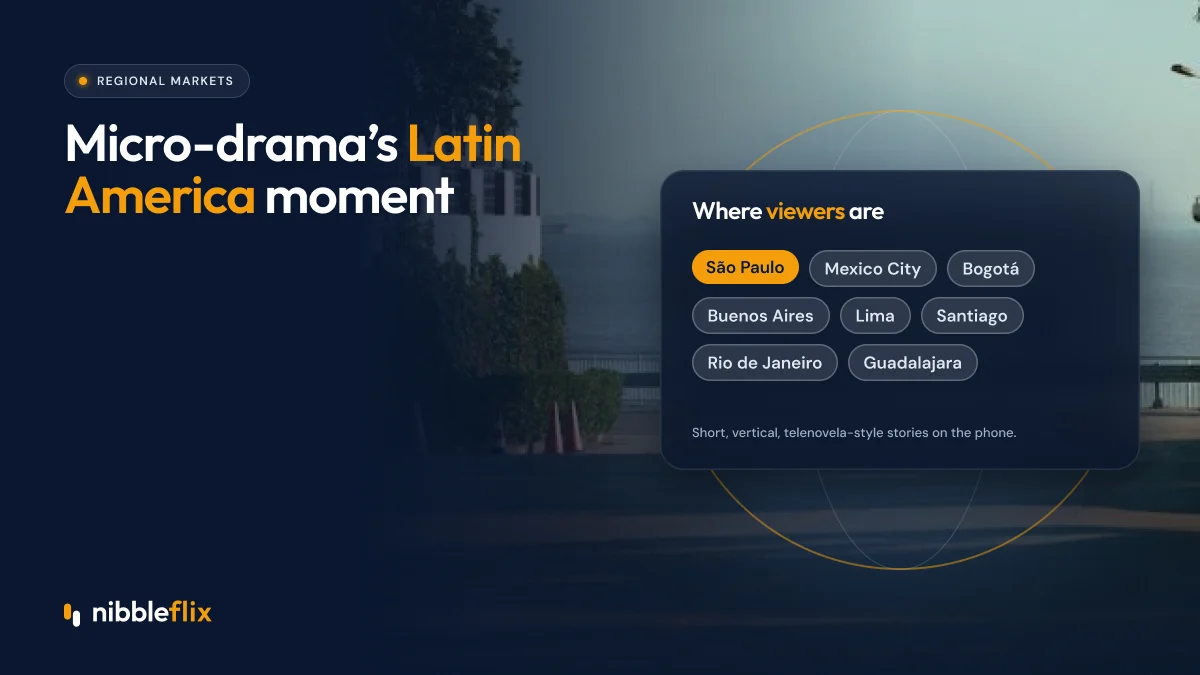
A Spanish-language catalog can serve Mexico, Colombia, Argentina, Chile and Peru together, while Brazil usually needs its own Portuguese content and marketing.
How to win: a playbook for a streaming app in Latin America
- Lead with local stories. Commission or co-produce series with local writers and actors. Use licensed content to fill the catalog while originals are in production. Our guide to micro drama content licensing covers the options.
- Localize everything else. AI subtitles in 12 languages and AI dubbing on NibbleFlix help bring licensed titles into Spanish and Portuguese quickly. Learn more about our AI streaming tools.
- Price for local wallets. Offer small coin packs, a weekly VIP pass and rewarded ad unlocks so every viewer has a way to keep watching. See our monetization options.
- Build habits early. Daily check-in rewards and new-episode push alerts turn first-time viewers into daily ones.
- Market with hooks. Use the most dramatic 10 seconds of each series in social ads, and test different hooks per country.
- Own your brand and data. Launch under your own name so viewer relationships stay with you as the market matures.
Risks to plan for
Fast growth brings competition. Global apps are spending heavily on user acquisition in the region, so paid installs can get expensive. Store commission of up to 30% on in-app purchases cuts into small coin packs, which makes ad unlocks and efficient pricing more important. Tax and consumer rules also vary by country, so check local requirements before you set prices. Plan for these costs from the start rather than discovering them after launch.
Opportunities for broadcasters and studios
Latin American broadcasters and studios already own something global apps want: talent, production know-how and beloved formats. Vertical spin-offs of popular telenovelas, prequels told in two-minute episodes, or new stories with familiar actors can reach younger, mobile-first viewers who rarely watch linear TV.
Launching a branded app keeps that value in-house instead of licensing it away. With NibbleFlix micro-drama apps, you get a vertical 9:16 player with swipe navigation, coin and pass monetization, and iOS, Android and web apps under your own brand. The technical launch takes seven days from sign-up to store submission, with no code needed.
Key takeaways
- The micro drama Latin America market is growing fast, with strong retention compared with global averages.
- Telenovela culture and mobile-first viewing make the region a natural fit for vertical dramas.
- Brazil and Spanish-speaking markets need different content and marketing plans.
- Local stories, localized catalogs and flexible pricing are the main ways to win.
- Broadcasters and studios can launch branded apps instead of licensing their best IP away.
Planning a short drama app for Latin America? Book a demo and we will show you how to launch in Spanish and Portuguese.
Frequently asked questions
Why are micro dramas so popular in Latin America?
They build on the region’s long love of telenovelas, with the same romance, family secrets and revenge, but in short vertical episodes made for phones. Mobile-first viewing habits and flexible ways to pay, such as coins and ad unlocks, make them easy to start watching and easy to keep watching.
Should a LATAM short drama app launch in Spanish or Portuguese?
It depends on your target market. A Spanish-language catalog can serve Mexico, Colombia, Argentina, Chile and Peru together, while Brazil usually needs Portuguese content and its own marketing. Many operators start with one language, then use AI subtitles and dubbing to add the other.
How should I price a micro drama app in Latin America?
Offer low-cost entry points. Small coin packs, a weekly VIP pass and rewarded ad unlocks let viewers spend a little or nothing and keep watching. Use local price tiers in the app stores, and run promotions around local moments such as Carnival or the Christmas season.
Can telenovela producers launch their own micro drama app?
Yes. Broadcasters and studios with talent and formats are well placed to create vertical spin-offs and new short series. With a white-label platform like NibbleFlix, they can launch a branded app under their own name in seven days, without code, and keep the viewer data and revenue.