
In this article
- How the pay per episode model works
- What is a VIP pass in streaming?
- When pay-per-episode and VIP passes beat a monthly subscription
- When a monthly subscription is still better
- Comparing the models
- Weekly pass pricing and coin packs
- Keeping viewers spending without burning them out
- Setting up a pay per episode model on NibbleFlix
- Key takeaways
- Frequently asked questions
- What is a pay-per-episode model?
- How should I price a VIP pass against coins?
- Is pay-per-episode only for micro-dramas?
- Do pay-per-episode apps have high churn?
Monthly subscriptions are the default in streaming, but they are not always the best fit. For serialized, cliffhanger-driven content, many viewers would rather pay for the next episode right now than commit to a month. That is where a pay per episode model and VIP passes come in.
The short answer: a pay per episode model beats a monthly subscription when content is short and serialized, viewers binge one story at a time, and your audience prefers small payments over monthly commitments. VIP passes then capture heavy viewers who would otherwise spend more on single episodes.
This article explains how both models work, when they outperform subscriptions, and how to price them so they support each other.
How the pay per episode model works
In a pay per episode model, viewers watch a few free episodes and then pay to unlock each next one. Payment is usually made with coins bought in packs through in-app purchases, though some apps also let viewers unlock an episode by watching an ad.
These episodic payments are small, often the cost of a few coins, so the decision feels easy. The cliffhanger at the end of each episode does the selling. This is the core engine of micro-drama apps, explained in how micro-drama apps make money from 2-minute episodes.
What is a VIP pass in streaming?
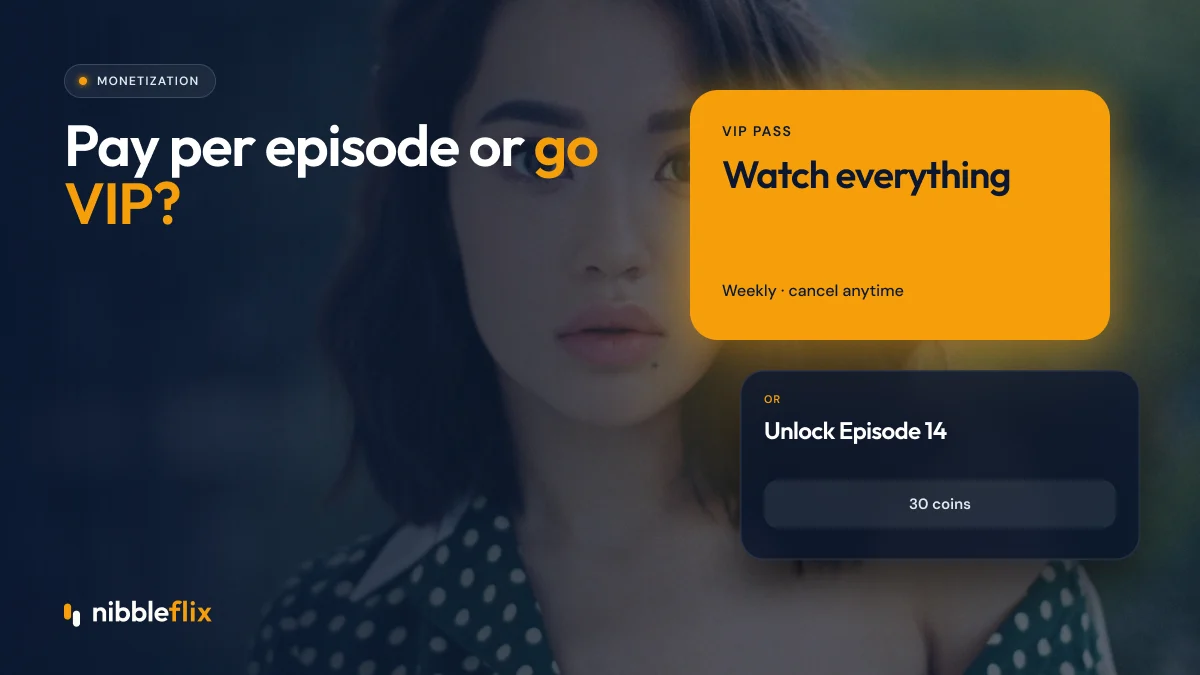
A VIP pass streaming offer unlocks all episodes, or all episodes in a category, for a fixed period. Weekly, monthly and annual passes are common. Viewers who binge several series a week quickly find a pass cheaper than buying episodes one by one.
The pass is often promoted at the exact moment a viewer runs low on coins, framed as a better-value alternative. Some apps add perks such as early access to new episodes or no ads.
When pay-per-episode and VIP passes beat a monthly subscription
These models are not right for every catalog. They work best under specific conditions.
- Short, serialized content. Micro-dramas with 1 to 3 minute episodes and strong cliffhangers drive repeated unlocks.
- Impulse viewing. Viewers discover a story through a social clip and want to finish it tonight.
- Price-sensitive audiences. Small micro-transactions in video suit markets where monthly fees feel large.
- Story-by-story interest. Viewers come for one series rather than a whole library.
The results speak for themselves. Sensor Tower reports that DramaBox and ReelShort each earned near US$140M in Q1 2026 in in-app purchase revenue. In the US alone, Apptopia found that top microdrama apps passed $17 million in IAP revenue in June 2026.
When a monthly subscription is still better
For long-form libraries of films, documentaries or full-length series, a monthly plan usually works better. Viewers browse, sample and return over weeks, so per-episode pricing would feel like a toll. The same is true for kids and education content, where parents and learners prefer predictable costs.
Some services use both. A long-form library sits behind a monthly plan, while a separate collection of short series runs on coins and passes. This lets you test a pay per episode model with one or two titles before deciding how far to take it.
Comparing the models
| Model | Viewer pays | Strength | Weakness |
|---|---|---|---|
| Pay-per-episode (coins) | Per unlock | Low barrier, high revenue from engaged viewers | Can feel expensive for heavy bingers |
| VIP pass | Fixed price for a period | Captures heavy viewers, predictable spend | Weekly passes churn quickly |
| Monthly subscription | Monthly fee | Predictable revenue, suits large libraries | Higher commitment barrier |
| Watch an ad to unlock | Time instead of money | Monetizes non-payers | Lower revenue per view |
Weekly pass pricing and coin packs
The two models work best together. Price them so each viewer naturally finds the right option.
- Set the free preview. Give enough free episodes to hook the viewer, often the first several.
- Price coin packs in steps. Small, medium and large packs, with bonus coins on bigger ones.
- Anchor the VIP pass. Make a weekly pass cost less than unlocking a typical binge with coins.
- Offer longer passes at a discount. Monthly and annual VIP passes reward loyal viewers.
- Keep an ad unlock option. Viewers who will not pay still progress, and you still earn.
Weekly pass pricing should feel like a small treat in local currency. In Latin America and Southeast Asia, low weekly prices often convert better than monthly ones. Our guide on coin monetization for short drama apps covers pack design in more depth.
Keeping viewers spending without burning them out
Aggressive paywalls can drive short-term revenue and long-term churn. Balance them with retention tools. Daily check-in rewards give viewers free coins for coming back, and new-episode push alerts remind them when a story continues. Promotional offers, such as bonus coins on a first purchase, help hesitant viewers make their first payment.
Be transparent. Show the coin price before each unlock and make it easy to see remaining balance. Trust keeps viewers spending over months, not just days.
Setting up a pay per episode model on NibbleFlix
NibbleFlix supports pay-per-episode, coins, VIP passes, subscriptions, ads and promotional offers in one app. First episodes can be free, then viewers unlock by coins, VIP pass or watching an ad. The micro-drama solution includes a vertical 9:16 player with swipe navigation, and you set prices per episode or series from the dashboard with no code. Explore every option on the monetization page.
Key takeaways
- Pay-per-episode suits short, serialized content and impulse viewing.
- VIP passes capture heavy viewers and should be the best value for bingers.
- Monthly subscriptions still win for long-form libraries, kids and education.
- Combine coins, passes and ad unlocks so every viewer has a path.
- Use check-in rewards, push alerts and clear pricing to keep viewers spending.
Thinking about coins and VIP passes for your series? Book a demo to see the full micro-drama setup.
Frequently asked questions
What is a pay-per-episode model?
It is a pricing approach where viewers watch a few free episodes, then pay to unlock each next episode, usually with coins bought through in-app purchases. Some apps also allow unlocking by watching an ad. It suits short, serialized content where each cliffhanger encourages the next unlock.
How should I price a VIP pass against coins?
Make the pass cheaper than what a typical binge would cost in coins. That way heavy viewers upgrade, while occasional viewers keep buying coins. Offer weekly, monthly and annual passes, with the longer ones discounted, so loyal fans have a clear reason to commit for longer.
Is pay-per-episode only for micro-dramas?
It works best for micro-dramas and other short, cliffhanger-driven series, but some services use it for premium episodes, early access or special events. For long-form libraries, a subscription or rental model usually fits better, because viewers browse widely rather than following one story.
Do pay-per-episode apps have high churn?
They can, because viewers often leave after finishing a story. Reduce churn by releasing new series regularly, sending new-episode push alerts, offering daily check-in rewards and promoting a VIP pass at the right moment. A strong catalog pipeline keeps viewers coming back for the next story.