
In this article
- Why streaming subscription pricing needs a regional approach
- Research before you set an OTT pricing strategy
- Regional pricing streaming: plan types that work
- Weekly passes
- Setting the actual price
- Payments shape your pricing
- Test, measure and adjust
- Key takeaways
- Frequently asked questions
- Should I use the same subscription price in every country?
- Are weekly passes better than monthly subscriptions?
- How do app store fees affect low prices?
- How often should I change my streaming prices?
A price that works in Germany can stall growth in Colombia, Egypt or Indonesia. Getting streaming subscription pricing right in emerging markets is less about copying a global price list and more about matching how people actually earn, pay and watch.
The short answer: price streaming subscriptions in emerging markets by setting regional prices in local currency, offering shorter plans such as weekly passes, combining a free ad-supported tier with paid options, and testing price points by country rather than using one global rate.
This guide covers how to research local willingness to pay, which plan lengths to offer, how payment methods shape pricing, and how to test and adjust over time.
Why streaming subscription pricing needs a regional approach
Income levels, card ownership and competition vary widely between regions. A single US dollar price often looks expensive in local currency and may not even be payable for viewers without an international card.
Revenue data shows the gap. According to the Adjust short drama apps report covered by PPC Land, revenue per monthly active user in MENA rose from $0.38 to $0.43, while APAC reached $1.45. The same report shows LATAM installs up 913% year on year in Q1 2026. Fast-growing audiences with lower spend per user call for pricing built for volume, not just for premium buyers.
Research before you set an OTT pricing strategy
Good pricing starts with local research, not guesswork. Before launch, gather three types of input for each target country.
- Competitor prices. List what local and global services charge, including mobile-only and ad-supported plans.
- Everyday reference points. Compare your price with things viewers already pay for, such as a mobile data top-up or a cinema ticket.
- Payment access. Find out how many of your viewers can pay through app stores, cards, wallets or carrier billing.
Talk to a few people in each market if you can. A short survey of an existing community will tell you more than a spreadsheet of averages.
Also look at watch habits. Where viewers spend a lot of time on phones and prepaid data, short sessions and small payments fit better. Where households share a smart TV, a family plan with several profiles can justify a higher price. Your streaming subscription pricing should reflect both who pays and how they watch.
Regional pricing streaming: plan types that work
When you price a video subscription for emerging markets, the plan length matters as much as the price itself.
| Plan type | Why it works | Watch out for |
|---|---|---|
| Weekly passes | Low entry price, matches weekly budgets, ideal for binge series | Higher churn, so keep renewal reminders friendly |
| Monthly plan | Familiar, predictable revenue | Can feel expensive in local currency |
| Annual plan | Best value for loyal fans, improves cash flow | Large upfront cost limits uptake |
| Free with ads | Reaches viewers who cannot or will not pay | Needs enough ad demand in that market |
| Coins or pay-per-episode | Small, flexible payments without commitment | Price so heavy users still prefer a pass |
Weekly passes
Weekly passes are popular in micro-drama apps across Southeast Asia and Latin America because they let a viewer finish a series without a monthly commitment. A weekly price that looks small in local currency often converts better than a monthly price that looks large, even if the monthly plan is better value. For more on this model, see pay-per-episode and VIP passes.
Setting the actual price
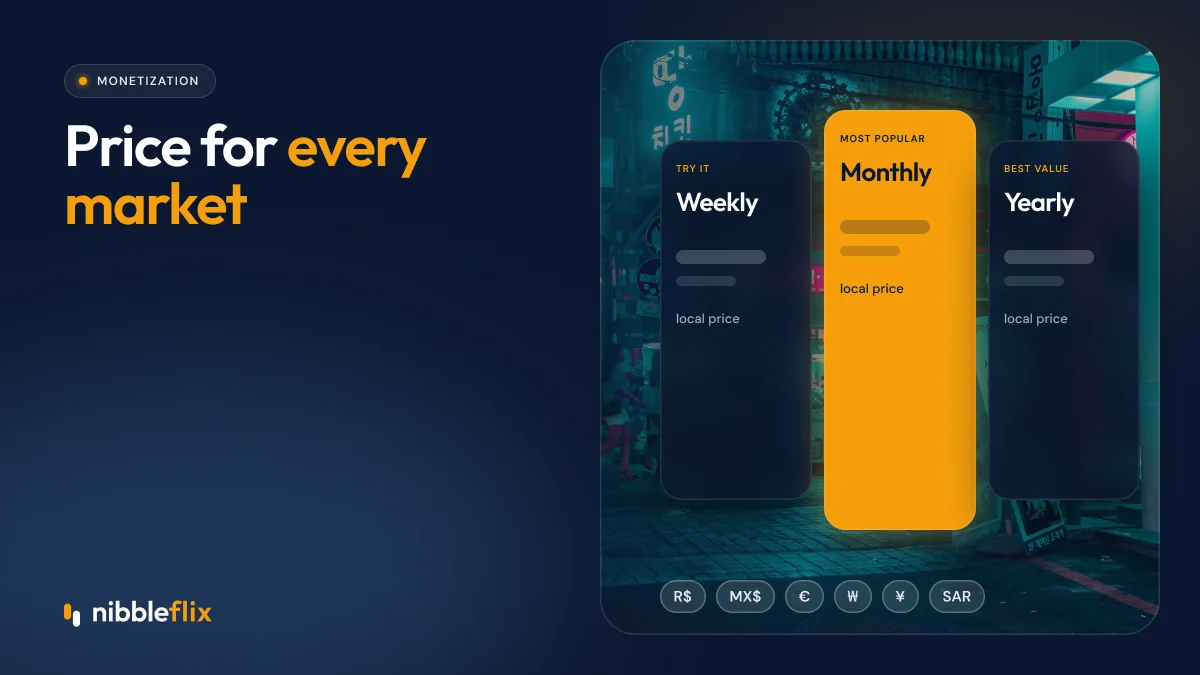
Start with tiers rather than one price per country. Many services group countries into three or four bands based on purchasing power and set a price for each band. App stores also offer local price tiers, which makes this easier to manage.
As an illustration only, a service might charge USD 7.99 a month in its highest band, around EUR 5 in mid-band European markets, and the local equivalent of USD 2 to 3 in its lowest band, with weekly passes below that. The right numbers for you depend on your content, competition and costs.
- Use local currency and round to prices that look natural locally.
- Keep the gap between tiers clear so the better-value plan is obvious.
- Offer a free entry point, such as free first episodes or an ad-supported tier.
- Use promotional offers for launches, holidays and win-back campaigns.
Payments shape your pricing
In many emerging markets, card penetration is lower and app store billing is the easiest path. Apple and Google charge a commission of up to 30% on in-app purchases, so factor that into your margins when you set low prices. Our guide to in-app purchases for streaming apps explains the rules.
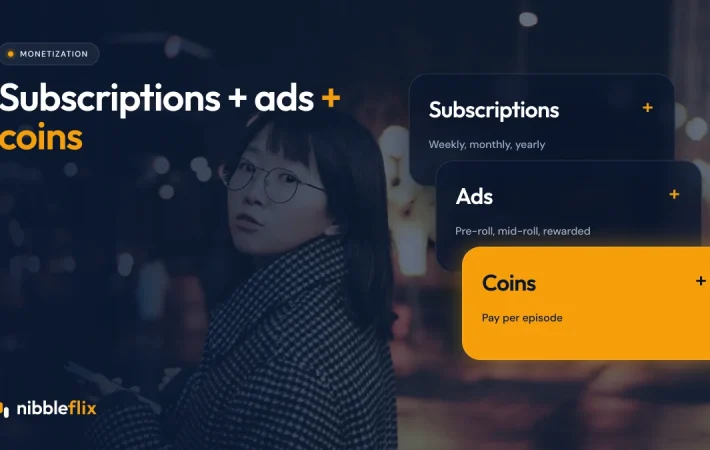
Small, flexible payment options such as coins and rewarded ads also help viewers who prefer not to commit. Offering several ways to pay in one app usually beats forcing everyone into a monthly card subscription.
Test, measure and adjust
Treat your first price as a starting point. Track conversion from free to paid, renewal rates and revenue per user for each country and plan. If a weekly pass converts well but few people renew, try a discounted monthly upgrade offer at the end of the first week.
With NibbleFlix, you set prices, plans and promotional offers from the admin dashboard without code, and you can combine subscriptions, ads, rentals, pay-per-episode and coins in one app. See every option on the monetization page.
Key takeaways
- Streaming subscription pricing in emerging markets should be regional, in local currency and based on local research.
- Weekly passes, annual plans, ad-supported tiers and coins each serve different viewers.
- Group countries into pricing bands and keep the best-value plan obvious.
- Factor app store commissions into low price points.
- Measure conversion and renewals by country, then adjust.
Want help designing regional plans for your streaming app? Book a demo and we will show you how pricing works on the platform.
Frequently asked questions
Should I use the same subscription price in every country?
Usually not. A single global price tends to be too high for emerging markets and too low for wealthier ones. Group countries into pricing bands based on purchasing power and local competition, set prices in local currency, and adjust each band based on conversion and renewal data.
Are weekly passes better than monthly subscriptions?
In many emerging markets, weekly passes convert better because the entry price is lower and matches how people budget. They also churn faster. Many services offer both, using a weekly pass to start the relationship and a discounted monthly or annual plan to keep loyal viewers.
How do app store fees affect low prices?
Apple and Google take a commission of up to 30% on in-app purchases, which matters more when prices are small. Build the fee into your margins, use app store local price tiers, and consider ads and coins as additional revenue so low prices still cover your costs.
How often should I change my streaming prices?
Review pricing every quarter, but change it only when data supports it. Test new prices on new sign-ups or in one country first, and give existing subscribers notice before any increase. Frequent unexplained changes damage trust and can raise churn among loyal viewers.