
In this article
- Why the MENA streaming app opportunity is worth localizing for
- RTL app design: getting right-to-left right
- Arabic subtitles that read naturally
- What good Arabic subtitles need
- Gulf dialect dubbing and other voice choices
- Your Arabic localization streaming checklist beyond language
- Metadata and artwork
- Content standards and ratings
- Release timing
- Payments and pricing
- A simple rollout plan
- Arabic localization with NibbleFlix
- Key takeaways
- Frequently asked questions
- Do I need a full RTL layout for an Arabic streaming app?
- Which Arabic should I use for subtitles?
- Should I dub in Gulf Arabic or Egyptian Arabic?
- How does Ramadan affect a MENA streaming launch?
The Middle East and North Africa is one of the most attractive regions for new streaming services, but viewers there notice quickly when an app was built for someone else. Making your Arabic localization streaming-ready goes far beyond translating buttons. It shapes layout, language, voice, artwork and even release timing.
The short answer: to localize a streaming app for MENA, you need a true right-to-left interface, high-quality Arabic subtitles, dubbing in the right dialect for each audience, Arabic metadata and artwork, and local payment and content norms built in from the start.
This practical guide walks through each layer and the mistakes that most often slow launches down.
Why the MENA streaming app opportunity is worth localizing for
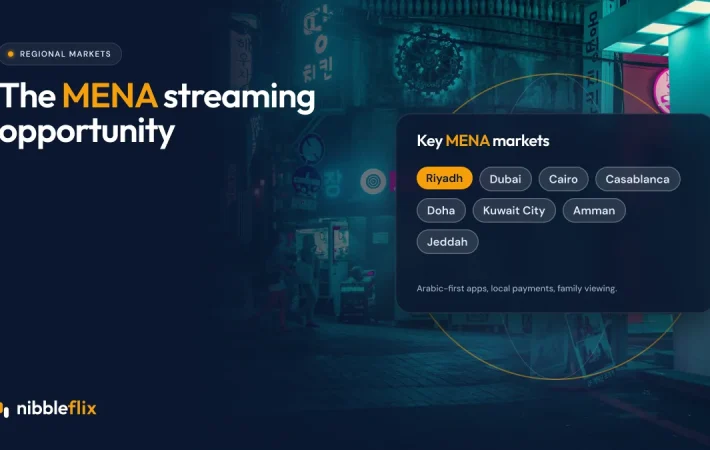
The region is spending more on video every year. Omdia projected the MENA streaming video market to reach US$1.5 billion by the end of 2025, with more than 27 million SVOD subscriptions, and forecast online video revenue of US$8.4 billion by 2029.
Mobile viewing is growing fast too. Adjust data reported by PPC Land show short drama app installs in MENA up 323% year on year in Q1 2026, with revenue per monthly active user rising from $0.38 to $0.43. Viewers are trying new apps, and the ones that feel local have a better chance of keeping them. For the wider picture, read our overview of the MENA streaming market.
RTL app design: getting right-to-left right
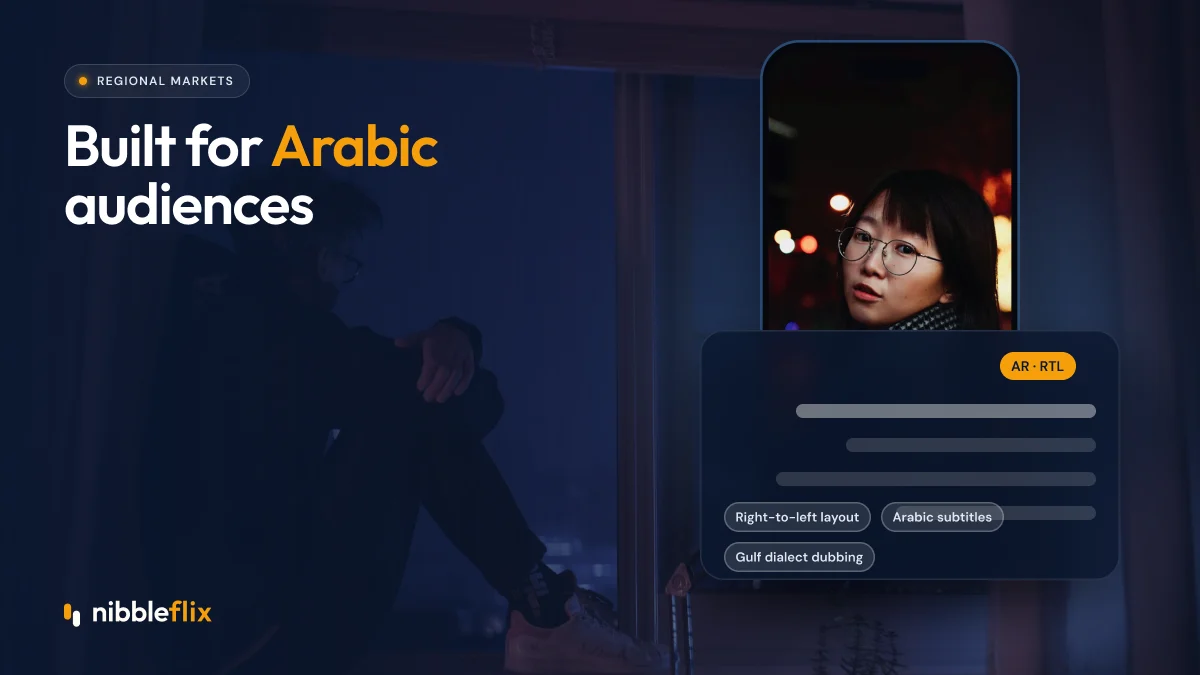
Arabic reads right to left, so the whole interface should mirror, not only the text.
- Mirror the layout. Navigation, back buttons, carousels and progress indicators should flow from right to left.
- Keep media controls sensible. Video timelines and play buttons are usually kept left to right because they represent time, which is the common convention. Test with local users to confirm.
- Handle mixed text. Titles often mix Arabic with English names or numbers. Make sure bidirectional text renders correctly and punctuation lands in the right place.
- Choose good Arabic fonts. Some Latin fonts include poor Arabic glyphs. Use a typeface designed for Arabic, sized for TV viewing distances.
- Allow for text length. Arabic strings can be longer or shorter than English, so buttons and tiles need flexible sizing.
Test every screen on phones, web and smart TVs. A layout that mirrors well on mobile can still break on a TV grid where focus moves with a remote.
Arabic subtitles that read naturally
Subtitles are usually the fastest way to make a library available. Most subtitling in the region uses Modern Standard Arabic, which is understood across countries.
What good Arabic subtitles need
- Correct right-to-left rendering in the player on every device.
- Line lengths and timing suited to Arabic reading speed.
- Careful handling of names, numbers and English terms inside Arabic lines.
- Sensitive translation of romance, alcohol and religious references in line with local expectations.
AI subtitles make it practical to cover a whole library quickly, with native reviewers checking key titles. Our guide to AI subtitles for streaming explains a review workflow that works.
Gulf dialect dubbing and other voice choices
Dubbing reaches wider audiences, especially families and kids. The key decision is which form of Arabic to use.
| Option | Best for | Trade-off |
|---|---|---|
| Modern Standard Arabic | Documentaries, kids, pan-regional reach | Can feel formal for drama and comedy |
| Gulf (Khaleeji) dialect | Saudi Arabia, UAE, Kuwait and Gulf audiences | Less natural for North African viewers |
| Egyptian dialect | Comedy and drama with wide familiarity | Strong regional flavor |
| Levantine dialect | Drama, including dubbed Turkish series | Best suited to certain genres |
| Subtitles only | Testing demand, niche or fan content | Lower reach with family audiences |
Many services start with subtitles, then add dialect dubbing for their best performers. AI dubbing lowers the cost of trying more than one version.
Your Arabic localization streaming checklist beyond language
Metadata and artwork
Translate titles, synopses and genres, and check that artwork suits local norms. Key art with mirrored layouts and Arabic title treatments performs better than English art with a translated caption.
Content standards and ratings
Expectations around content vary by country. Apply clear age ratings, use parental controls, and decide which titles to offer in each market.
Release timing
Ramadan is the biggest viewing season of the year in much of the region, with evening viewing peaks after iftar. Plan premieres, push alerts and promotions around it. Weekends also differ by country, so schedule releases with that in mind.
Payments and pricing
Offer local currency pricing and the payment methods people actually use. App store billing covers many viewers, and mixing subscriptions with ad-supported tiers or pay-per-episode options helps reach different budgets. See our monetization options.
A simple rollout plan
An Arabic localization streaming project does not have to happen all at once. A phased approach lets you launch sooner and invest where viewers respond.
- Launch with a mirrored RTL interface and Arabic subtitles across your core library.
- Translate all metadata and refresh key art for your top titles.
- Add dubbing in one dialect for your best-performing shows.
- Plan a Ramadan content slate and promotion calendar.
- Review results by country and expand dialects or genres where demand is strong.
Arabic localization with NibbleFlix
NibbleFlix gives you white-label apps on iOS, Android, web and smart TVs under your own brand. The AI streaming tools include AI subtitles in 12 languages, AI dubbing and AI metadata generation, and you can mix subscriptions, ads, coins and pay-per-episode in one app. Everything is managed from one dashboard without code.
Key takeaways
- MENA viewers expect a fully mirrored RTL app, not just translated text.
- Arabic subtitles in Modern Standard Arabic are the fastest way to open your library.
- Pick dubbing dialects by audience: Gulf, Egyptian or Levantine.
- Localize metadata, artwork, ratings, payments and your Ramadan calendar too.
Planning a streaming app for Arabic-speaking viewers? Book a demo and we will walk you through a MENA launch.
Frequently asked questions
Do I need a full RTL layout for an Arabic streaming app?
Yes. Arabic-speaking viewers expect navigation, carousels, menus and text alignment to flow from right to left. Simply translating labels into Arabic while keeping a left-to-right layout feels unfinished. Video timelines are often left as they are, but test every screen with local users on phones and TVs.
Which Arabic should I use for subtitles?
Most streaming services use Modern Standard Arabic for subtitles because it is understood across the region. Dialects are more common in dubbing, where spoken language needs to sound natural. Make sure your subtitles render correctly right to left on every device and are reviewed by native speakers.
Should I dub in Gulf Arabic or Egyptian Arabic?
It depends on your audience and genre. Gulf dialect suits viewers in Saudi Arabia, the UAE and other Gulf states. Egyptian Arabic is widely understood thanks to film and TV, and works well for comedy and drama. Many services begin with one dialect and expand based on viewing data.
How does Ramadan affect a MENA streaming launch?
Ramadan is the peak viewing season in much of the region, with heavy evening viewing after iftar. Many services plan their biggest premieres and promotions for it. Launching your app a few weeks before Ramadan gives viewers time to discover it before the season starts.