
In this article
- Why streaming personalization matters
- How an OTT recommendation engine works
- Content-based recommendations
- Collaborative filtering
- Rules and editorial curation
- Content recommendations for small vs large platforms
- Signals that matter most
- Home screen personalization: practical steps
- AI recommendations for video: where AI helps most
- Personalization and retention
- Building the foundations with NibbleFlix
- Key takeaways
- Frequently asked questions
- What is an OTT recommendation engine?
- Can a small streaming service personalize without big data?
- Which viewer signals are most useful for recommendations?
- How do recommendations reduce churn?
Big streaming platforms are known for knowing what you want to watch next. Smaller services often assume they cannot compete without a huge data science team. In reality, a focused OTT recommendation engine built on good metadata and a few strong signals can make a niche platform feel just as personal.
The short answer: small platforms can compete on personalization by combining clean metadata, simple behavioral signals such as watch history and completion, editor-curated rows and well-timed notifications, rather than trying to copy the complex models of the largest services.
This guide explains how recommendations work, which approaches suit smaller libraries, and the practical steps to get started.
Why streaming personalization matters
Every streaming app has the same problem: too many choices and too little time. If viewers do not find something quickly, they close the app. Personalization shortens the path from opening the app to pressing play.
Attention is the real competition. Sensor Tower reports that average daily time in short drama apps reached 25 minutes by April 2026, up 85% from January 2025, while traditional OTT stayed flat at about 35 minutes. Short-form apps win time partly because the next episode is always one swipe away. Long-form services need recommendations that remove friction in the same way.
How an OTT recommendation engine works
Most recommendation systems blend three approaches.
Content-based recommendations
These match titles by their attributes: genre, mood, cast, themes and keywords. If you finished a Korean romantic comedy, you see more like it. This method works from day one because it does not need much viewing data, but it depends on rich metadata.
Collaborative filtering
This approach finds patterns in behavior: “people who watched this also watched that”. It can surface surprising, useful picks, but it needs a reasonable amount of viewing data to work well.
Rules and editorial curation
Editors and business rules decide what to promote: new releases, seasonal collections, regional favorites or titles that convert free viewers to paying ones. This layer keeps recommendations aligned with your strategy.
Content recommendations for small vs large platforms
| Factor | Large platforms | Smaller platforms |
|---|---|---|
| Data volume | Massive viewing histories | Smaller, more focused audiences |
| Main method | Complex machine learning models | Metadata, simple signals and curation |
| Library size | Very broad catalogs | Niche, deeper in a few genres |
| Strength | Scale and precision | Clear identity and expert curation |
| Best quick win | Model tuning | Better tags and smarter home rows |
A niche service has one advantage: its audience already shares a taste. A platform focused on anime, Turkish drama or documentaries does not need to guess as much as a general service does.
Signals that matter most
- Completion. Finishing an episode is a far stronger signal than starting one.
- Binge behavior. Watching several episodes in a row shows real interest in a series.
- Searches. What people type reveals intent, including titles you do not yet have.
- Purchases and unlocks. In coin or pay-per-episode apps, what viewers pay for is the clearest signal of all.
- Time and device. Short episodes on phones in the morning, films on TV at night.
- Region and language. A viewer in Saudi Arabia and one in Brazil may need very different home screens.
Owning this data matters. A white-label app keeps viewer data in your hands, rather than in a third-party platform. Read more in why first-party data matters in streaming.
Home screen personalization: practical steps
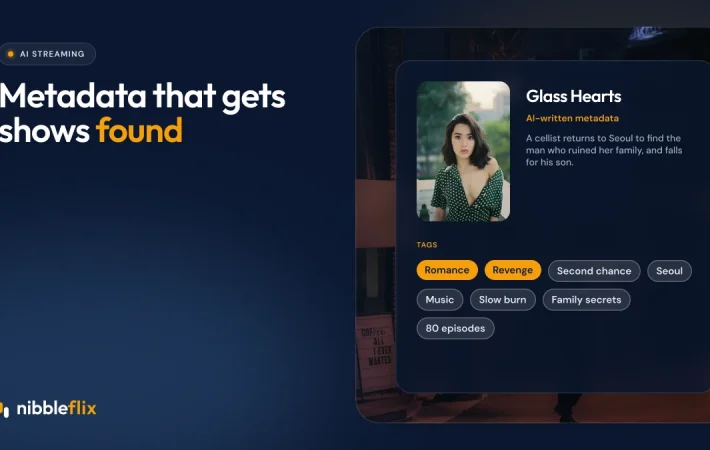
- Fix your metadata first. Recommendations are only as good as your tags. AI video metadata tools can enrich a whole library quickly.
- Add “Continue watching” and “Next episode”. These two features drive a large share of plays on most services.
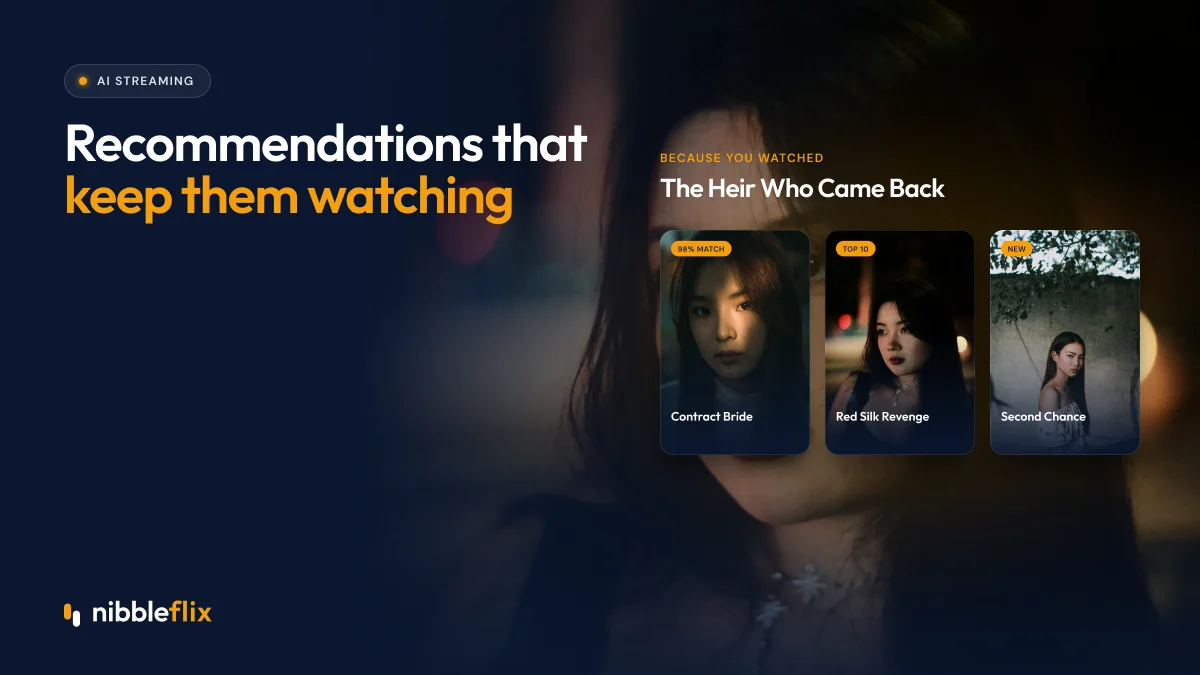
- Build “Because you watched” rows. Simple content-based matching works well from launch.
- Curate themed rows by region. Lunar New Year picks for Southeast Asia, Ramadan rows for MENA, summer telenovelas for Latin America.
- Use notifications wisely. New-episode push alerts for series a viewer follows bring people back at the right moment.
- Reward habits. Daily check-in rewards in micro-drama apps keep viewers returning and generate more signals.
- Measure and adjust. Track play rate from each row and drop the ones that do not perform.
AI recommendations for video: where AI helps most
AI is most useful in two places for smaller services. First, it enriches metadata, so content-based recommendations have more to work with. Second, it can rank rows and titles based on behavior once you have enough data. Start with the first, which gives results immediately, and add the second as your audience grows.
Avoid over-personalizing too early. When data is thin, a mix of curated and personalized rows feels better than an empty or random “For you” row.
Personalization and retention
Good recommendations are one of the strongest tools against churn. A viewer who always has a next show lined up is far less likely to cancel. For more tactics, see our guide on how to reduce churn on your streaming app.
Building the foundations with NibbleFlix
NibbleFlix gives you the building blocks a recommendation strategy needs. AI metadata generation enriches your library, the CMS lets you schedule releases and organize content without code, and retention features such as new-episode push alerts and daily check-in rewards keep viewers coming back. Because your apps are fully white-label, the viewer data stays yours.
Key takeaways
- Small platforms can compete on personalization with strong metadata, clear signals and curation.
- Content-based recommendations work from day one; collaborative filtering grows with data.
- Completion, binges, searches and purchases are the most useful signals.
- Pair recommendations with push alerts and habit rewards to lift retention.
Want to see how your library could feel more personal? Book a demo and we will show you where to start.
Frequently asked questions
What is an OTT recommendation engine?
An OTT recommendation engine is the system that decides which titles each viewer sees on their home screen and in rows such as “Because you watched”. It combines content metadata, viewing behavior and business rules to suggest what to watch next, helping viewers find content faster and keeping them engaged longer.
Can a small streaming service personalize without big data?
Yes. Content-based recommendations rely on metadata rather than huge viewing histories, so they work from launch. Combined with continue-watching rows, editor curation and timely push alerts, they make a small service feel personal. More advanced behavior-based models can be added as your audience grows.
Which viewer signals are most useful for recommendations?
Episode completion, binge sessions, searches and purchases are the strongest signals. Completion shows real interest, while purchases or coin unlocks show what viewers value enough to pay for. Device, time of day, region and language add context that helps tailor home screens for different audiences.
How do recommendations reduce churn?
Viewers usually cancel when they run out of things they want to watch. Good recommendations keep a relevant next show in front of them, so they keep finding value in the service. Pairing personalized rows with new-episode alerts and continue-watching features gives viewers regular reasons to return.