
In this article
- What first party data streaming actually means
- Three types of data you will collect
- Why viewer data ownership matters now
- Direct-to-consumer streaming vs third-party distribution
- Streaming analytics that drive revenue
- Acquisition
- Engagement
- Monetization and retention
- How to use first-party data without losing trust
- Building your own audience with a white-label app
- Key takeaways
- Frequently asked questions
- What is first-party data in streaming?
- Can I still distribute through other platforms if I own my app?
- Is collecting viewer data legal under GDPR?
- What analytics should a new streaming app track first?
If your shows live on someone else’s platform, you know what you earned but not who watched. You cannot email those viewers, price for them or bring them back. That is the core problem first party data streaming solves.
The short answer: first party data streaming means running your own app so that every sign-up, play, purchase and cancellation is recorded in systems you control, giving you the information to grow revenue and keep viewers.
This article explains what first-party data is, why it matters more each year, what to collect, and how to use it responsibly across Europe, Latin America, the Middle East and Asia Pacific.
What first party data streaming actually means
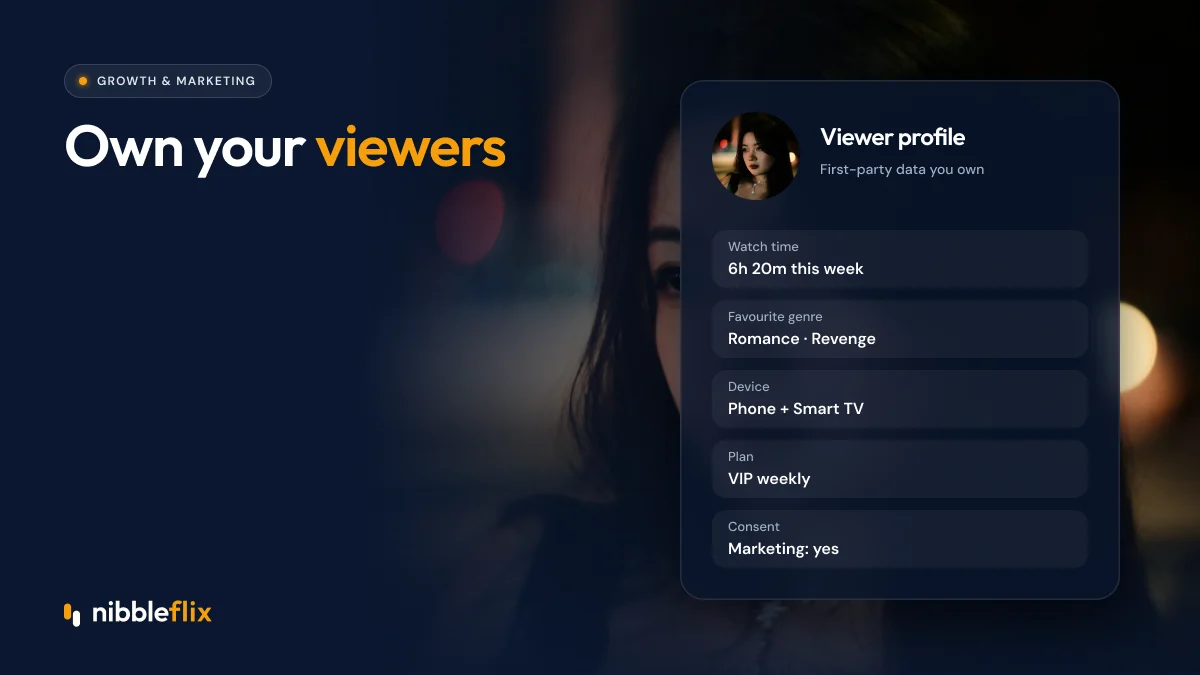
First-party data is information you collect directly from your own viewers, with their knowledge, through your own app or website. In streaming, that includes account details, viewing history, device types, payment events and responses to offers.
It is different from third-party data, which is bought or inferred from other companies, and from aggregated reports a distributor might share. Those reports tell you totals. First-party data tells you about individual viewers and cohorts, so you can act on it.
Three types of data you will collect
- Identity data: email, phone number, country, language and consent choices.
- Behavior data: what people watch, when they stop, how often they return and which device they use.
- Transaction data: subscriptions, rentals, coin purchases, renewals, refunds and failed payments.
Why viewer data ownership matters now
Several shifts have made viewer data ownership a priority for content owners of every size.
- Distribution deals hide the audience. Licensing to aggregators brings fees but rarely the viewer relationship. When the deal ends, so does your access.
- Tracking is harder. Mobile platforms have tightened rules on cross-app tracking, and browsers keep limiting third-party cookies. Data you collect yourself is less affected.
- Privacy laws reward direct relationships. GDPR in the EU and similar rules in other regions require clear consent. It is easier to meet those rules when you collect data directly and explain why.
- Ad buyers pay for known audiences. If you run ads, being able to describe your audience accurately supports better rates.
In short, owning your audience turns a one-off content sale into a long-term business you can measure and improve.
Direct-to-consumer streaming vs third-party distribution
Most content owners will use both channels. The question is what each gives you.
| Factor | Third-party platforms | Your own direct-to-consumer app |
|---|---|---|
| Viewer identity | Held by the platform | Held by you |
| Viewing data | Summary reports, if any | Full event-level streaming analytics |
| Pricing control | Set by the platform | Set by you, by region and offer |
| Marketing to viewers | Not possible | Email, push alerts and in-app offers |
| Brand | The platform’s brand | Your brand, your store listings |
Direct-to-consumer streaming does not mean leaving every partner. It means having one channel where the relationship is yours, then using partners for reach.
Streaming analytics that drive revenue
Data only matters if it changes decisions. These are the metrics most services act on first.
Acquisition
Track which campaigns, countries and store pages bring sign-ups, and how many of those sign-ups start watching within 24 hours. A cheap install that never presses play is not cheap.
Engagement
Measure completion rates per title and per episode. For series, look at the drop-off between episode one and episode three. That tells you whether the hook works or the free preview is too short.
Monetization and retention
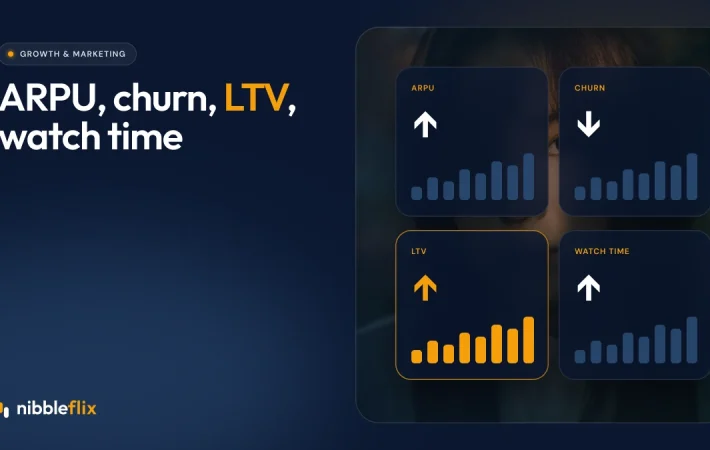
Watch conversion from free to paid, average revenue per user, renewal rates and churn by plan. Split everything by region, because a price that works in Germany may not work in Colombia. Our guide to streaming KPIs like ARPU, churn and LTV covers the formulas.
How to use first-party data without losing trust
Viewers share data when they see a fair exchange. Keep the exchange clear.
- Ask for consent plainly. Explain what you collect and why, in the viewer’s language.
- Collect only what you use. If you do not need a birth date, do not ask for it.
- Give value back. Use viewing history for better recommendations, new-episode alerts and relevant offers.
- Respect regional rules. GDPR applies to EU viewers, and countries such as Brazil have their own data protection laws. Check the rules in each launch market.
- Secure it. Limit internal access and keep payment data with certified payment providers.
Building your own audience with a white-label app
You do not need an engineering team to own your viewer relationship. NibbleFlix is fully white-label: the app carries your brand, the store listings are under your name, and the viewer data and revenue are yours. You can launch on iOS, Android, web and smart TV devices from one platform.
Inside the admin dashboard, you can see earnings, schedule releases and set prices without code. Retention tools like daily check-in rewards and new-episode push alerts let you act on what the data shows. If you are deciding how to get started, read what a white-label OTT platform is, or explore the full feature list.
Key takeaways
- First party data streaming gives you the viewer identity, behavior and payment data that third-party platforms keep for themselves.
- Privacy rules and tracking limits make data you collect directly more valuable each year.
- Focus streaming analytics on acquisition quality, episode drop-off, conversion and churn by region.
- Earn trust with clear consent, minimal collection and visible value in return.
- A white-label app lets you own your audience without building technology from scratch.
Ready to build a direct relationship with your viewers under your own brand? Book a demo to see how it works.
Frequently asked questions
What is first-party data in streaming?
It is information you collect directly from your own viewers through your own app or website. That includes account details, viewing history, devices and payments. Because you collect it yourself with consent, you can use it to improve recommendations, pricing and marketing, and it stays with you if partners change.
Can I still distribute through other platforms if I own my app?
Yes. Many content owners license to aggregators for reach while running their own app for loyal fans. The direct app becomes the place where you build the relationship, collect first-party data and offer exclusives, while partners help new viewers discover your brand.
Is collecting viewer data legal under GDPR?
Yes, if you have a lawful basis, usually consent or contract, and you are transparent about what you collect and why. Viewers must be able to access and delete their data. Other regions have their own laws, so review the rules in each country where you launch.
What analytics should a new streaming app track first?
Start with sign-ups by source, first-play rate, episode completion, free-to-paid conversion and churn by plan and country. These few numbers show whether marketing, content and pricing are working. Add deeper reports once you have enough viewers to see clear patterns in each segment.