
In this article
- Why a niche streaming service can beat the giants
- How to start a streaming service for a niche: pick the right audience
- Validate demand before you build
- Niche examples: faith, sports, education and more
- Building your niche catalog
- Choosing a model for your niche streaming service
- Launching without a tech team
- Key takeaways
- Frequently asked questions
- How many subscribers does a niche streaming service need?
- Can a niche streaming app be free?
- Do I need to own all my content?
- How long does it take to launch a niche streaming service?
The big streaming services compete on volume. A niche streaming service competes on relevance: a smaller library that a specific audience cannot find anywhere else, presented in a way that feels made for them.
The short answer: to launch a niche streaming service people will pay for, pick an audience with strong shared interest, secure content they value and cannot easily get for free, price it fairly for their region, and launch a branded app where you own the relationship.
This guide walks through choosing a niche, testing demand, building a catalog, choosing a business model and launching without a large tech team. Examples cover faith, sports, education and regional entertainment across Europe, Latin America, the Middle East and Asia Pacific.
Why a niche streaming service can beat the giants
General platforms try to serve everyone, so specialist audiences often feel underserved. A yoga community, a regional football league, a Korean-language cooking school or a Christian film library each has fans who want more of one thing, curated well.
Niche services also have practical advantages:
- Lower acquisition cost. Your audience gathers in known communities, clubs, churches, schools and creator channels.
- Higher loyalty. When the content is part of someone’s identity or hobby, they cancel less often.
- Less content spend. You need depth in one area, not breadth across every genre.
- Direct relationships. You know who your viewers are and can talk to them, which general platforms keep for themselves.
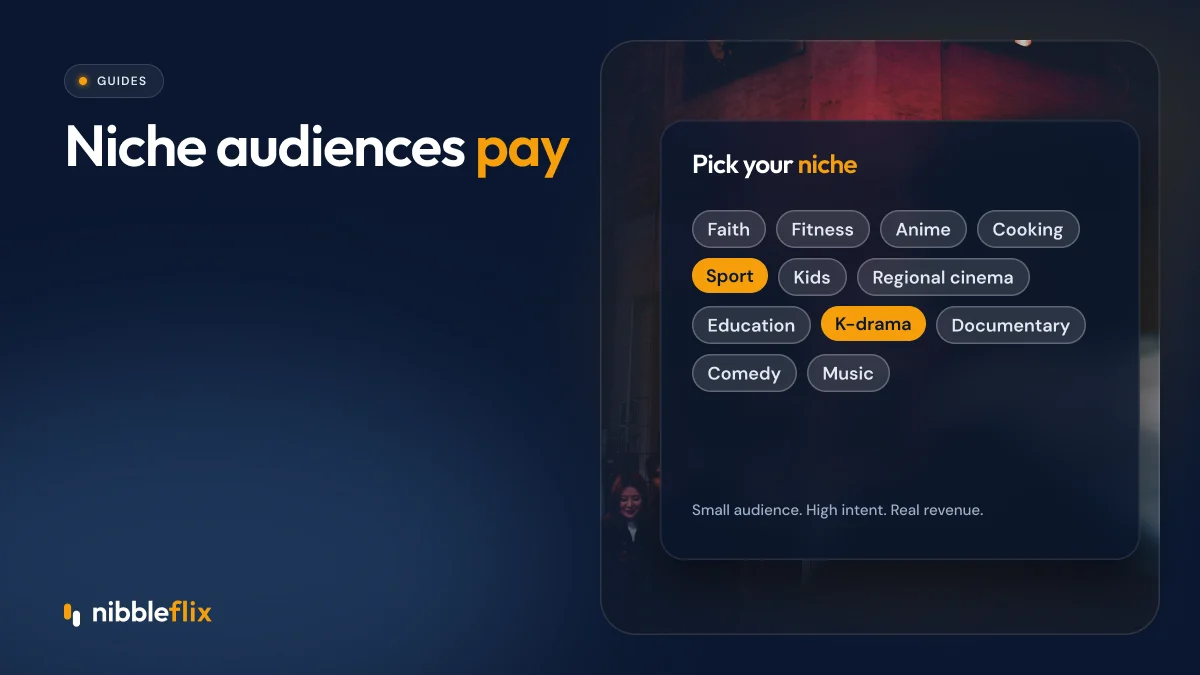
How to start a streaming service for a niche: pick the right audience
A good niche is not just small. It is reachable, passionate and willing to pay. Test your idea against these questions before you spend on content.
- Is the interest strong? Do people already spend money, travel or join clubs for it?
- Is the audience reachable? Can you name the communities, influencers, newsletters or events where they gather?
- Is the content scarce? If everything is free on YouTube, you need a clear reason to pay, such as exclusives, ad-free viewing or better organization.
- Is the audience big enough? A few thousand paying subscribers can sustain a lean service, but you should be able to see a path to that number.
Validate demand before you build
Run a waiting list page, survey an existing community or pre-sell an annual pass to early supporters. If you already have a social following, a short series released as a teaser can show whether people want more.
Niche examples: faith, sports, education and more
Different niches suit different models. Here is how common categories tend to work.
| Niche | Typical content | Common model | Growth channel |
|---|---|---|---|
| Faith streaming app | Sermons, worship, films, kids content | Low-cost subscription or free with donations | Churches, ministries, community events |
| Sports streaming app | Lower-league matches, highlights, training | Season pass, pay-per-view for big games | Clubs, leagues, fan groups |
| Education streaming platform | Courses, masterclasses, language lessons | Monthly or annual subscription, single-course rentals | Creators, schools, professional bodies |
| Regional or language entertainment | Local drama, comedy, documentaries | Hybrid of ads and subscription | Diaspora communities, social media |
| Hobby and lifestyle | Fitness, cooking, crafts, travel | Subscription with free taster episodes | Influencers, partner brands |
A lower-division football league in Spain, a gospel music library for Brazil, an Arabic-language kids channel for families in the Gulf, or a Japanese language school for learners in Southeast Asia all fit this pattern.
Building your niche catalog
You do not need thousands of hours on day one. You need enough content that a new subscriber finds value in their first week, plus a clear schedule of what is coming next.
- Own or co-own content where you can. Original series give you a reason to exist and rights you control.
- License selectively. Look for regional distributors and independent producers whose work is under-distributed.
- Partner with creators. Many creators prefer a revenue share on a dedicated app to relying only on social platforms.
- Release on a rhythm. Weekly drops give subscribers a reason to come back and stay subscribed.
Local language matters. Subtitles and dubbing can open your niche to neighboring markets, so plan for them early.
Choosing a model for your niche streaming service
Price is part of the product. A small, loyal audience will often pay a fair monthly fee, while a broader casual audience may respond better to free content with ads. Many niche services combine both: free episodes to attract viewers, then a subscription, rental or pass for the full library.
For live sports or one-off events, pay-per-view or season passes are common. For education, annual plans and single-course rentals work well. Our explainer on SVOD, AVOD, TVOD and hybrid models goes deeper, and the monetization options page shows what you can switch on.
Launching without a tech team
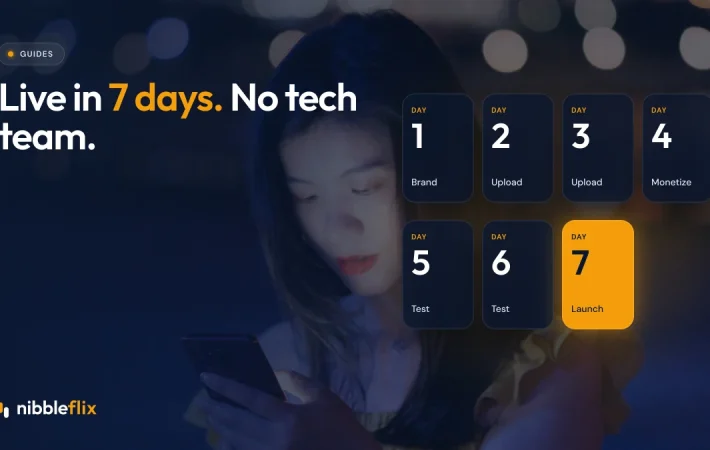
Building apps for phones, web and TVs from scratch can take a year and a full engineering team. A white-label platform removes that barrier. With NibbleFlix, you can launch your own streaming app in 7 days, from sign-up to App Store and Google Play submission, with no code needed and launch support included.
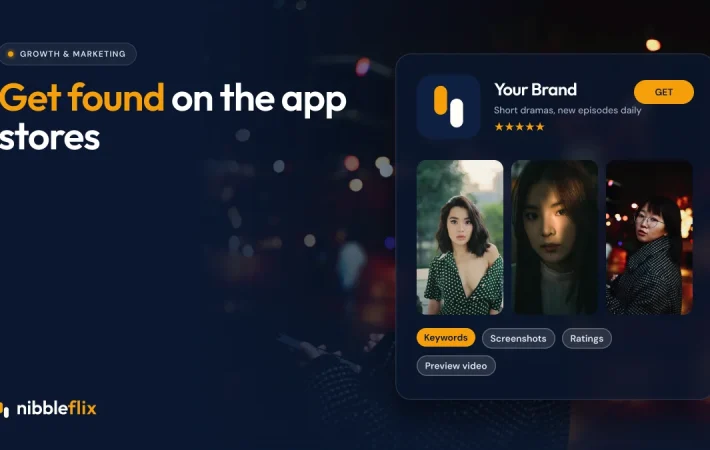
Your app carries your brand on iOS, Android, web and smart TVs, your store listings are under your name, and your viewer data and revenue stay with you. The entertainment OTT solution covers long-form libraries, and the CMS lets you upload, price and schedule content yourself. For a step-by-step view, see our guide on how to launch an OTT app.
Key takeaways
- Niche services win on relevance, loyalty and lower acquisition cost.
- Choose an audience that is passionate, reachable and underserved, then validate demand before building.
- Faith, sports, education and regional entertainment each suit different pricing models.
- Start with a focused catalog and a regular release rhythm.
- A white-label platform lets you launch a branded app in days without engineers.
Have a niche audience in mind? Book a demo and we will show you how your branded app could look and earn.
Frequently asked questions
How many subscribers does a niche streaming service need?
It depends on your costs and price, but many lean services break even with a few thousand paying subscribers. Keep content and marketing spend in proportion to your audience size, and use annual plans or passes to improve cash flow while you grow toward that number.
Can a niche streaming app be free?
Yes. Some niches, such as faith or community content, work best with free access funded by ads, donations or sponsorship. Others combine free episodes with a paid tier. Choose based on how willing your audience is to pay and how much reach matters to your mission.
Do I need to own all my content?
No. Many niche services mix original productions with licensed titles and creator partnerships on revenue share. Owning some exclusive content helps you stand out, but licensing lets you fill the catalog faster. Always confirm you have streaming rights for each territory where you launch.
How long does it take to launch a niche streaming service?
With a white-label platform, the app itself can be ready in about a week, from branding to store submission. The longer work is usually content rights, building your catalog and preparing launch marketing, so start those in parallel to save time.