
In this article
- What a white label OTT platform actually includes
- White label streaming platform vs building in-house
- Who uses a branded streaming app platform?
- Key features to look for in OTT software
- Device reach
- Flexible monetization
- A no-code CMS
- Localization tools
- Migration support
- Data ownership and compliance
- Room to grow
- Questions to ask any white label OTT provider
- How NibbleFlix approaches white-label OTT
- Key takeaways
- Frequently asked questions
- What does white label mean in OTT?
- Is a white label OTT platform cheaper than building one?
- Can I move from my current platform to a white label one?
- Which devices should a white label streaming platform support?
A white label OTT platform lets you launch a streaming service under your own brand without building the technology yourself. For broadcasters, studios, sports leagues, creators and media startups, it is now the most common way to go direct to viewers.
Short answer: a white label OTT platform is ready-made streaming software (apps, video delivery, payments and a content dashboard) that you rebrand and publish as your own service, keeping your brand, viewer data and revenue while the provider runs the technology.
This 2026 guide explains how these platforms work, what to look for, and how to choose between building and buying.
What a white label OTT platform actually includes
“OTT” (over the top) means video delivered over the internet rather than through cable or satellite. A complete OTT platform solution covers every layer between your content library and the viewer’s screen.
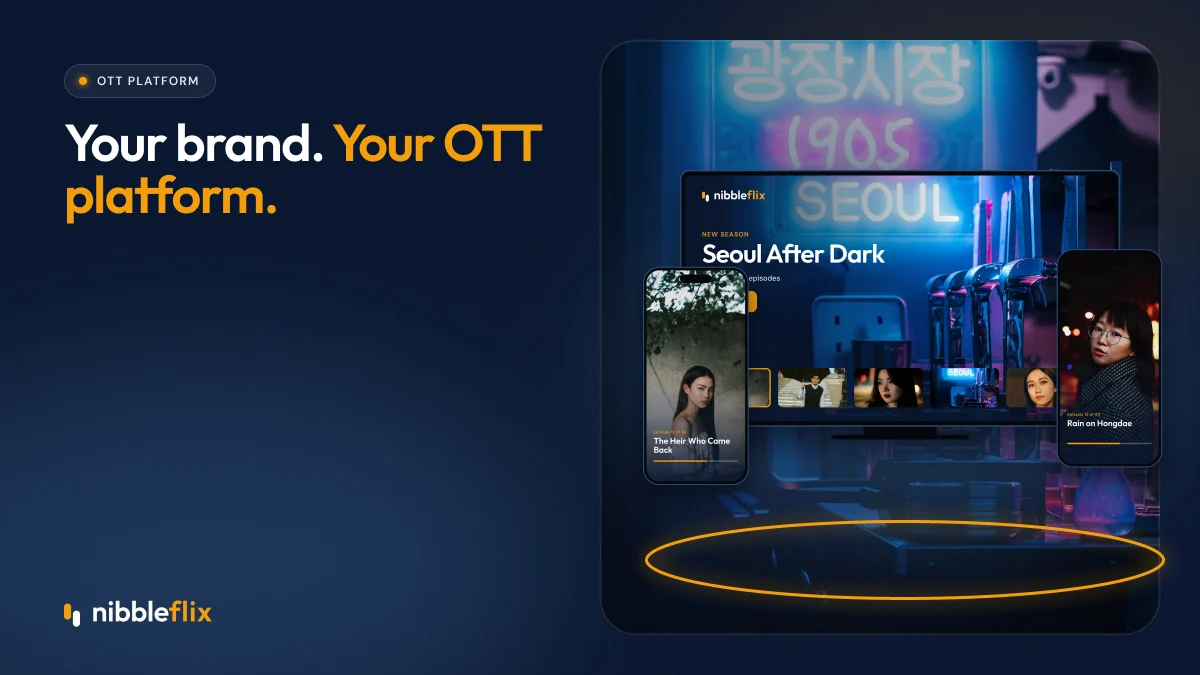
- Branded apps: iOS, Android, web and smart TV apps with your name, logo and colors.
- Video pipeline: encoding, storage, adaptive streaming and content delivery.
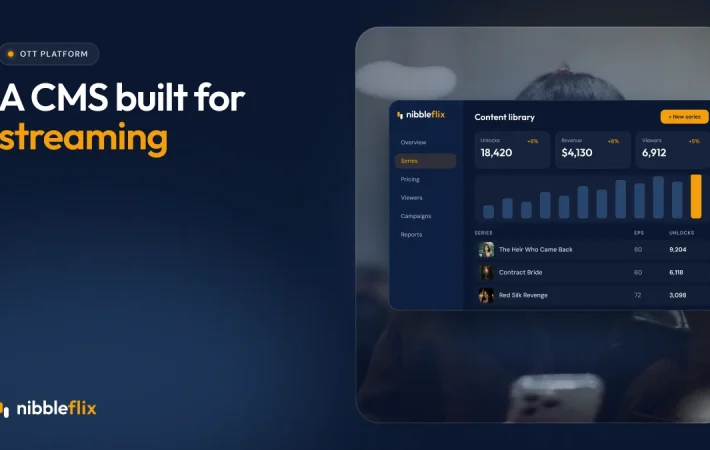
- Content management: a CMS to upload titles, add metadata, schedule releases and organize rows.
- Monetization: subscriptions, ads, rentals, in-app purchases and promotions.
- Viewer management: accounts, entitlements, analytics and notifications.
- Security: DRM such as Widevine, FairPlay and PlayReady, plus access controls.
“White label” means the provider’s name does not appear. Your app is listed in the App Store and Google Play under your developer account, and viewers see only your brand.
White label streaming platform vs building in-house
The core decision is whether to buy a platform or build your own stack. Here is how they compare for most media businesses.
| Factor | Build in-house | White label OTT platform |
|---|---|---|
| Time to launch | Many months to over a year | Days to weeks |
| Team required | Mobile, TV, backend, video and QA engineers | Content and marketing team |
| Device coverage | Each platform is a separate project | Phones, web and TV apps included |
| Maintenance | Your responsibility, forever | Handled by the provider |
| Customization | Unlimited, at a cost | Configurable within the platform |
| Ownership of brand, data and revenue | Full | Full, with a true white-label provider |
Building makes sense when technology is your competitive edge and you have the budget to sustain a large team. For most content owners, the edge is the catalog and audience, so a branded streaming app on a proven platform gets them to market faster with less risk.
Who uses a branded streaming app platform?
- Broadcasters adding a direct-to-consumer service alongside linear channels.
- Studios and distributors monetizing back catalogs or niche libraries.
- Sports and events organizations offering live and on-demand content to fans.
- Creators and educators moving premium content off social platforms.
- Micro-drama producers launching vertical short series apps with coin unlocks.
- FAST channel operators running free, ad-supported linear channels.
Demand is broad across regions. In MENA, Omdia projected the streaming video market would pass US$1.5 billion by the end of 2025, with over 27 million SVOD subscriptions. In Europe, FAST revenue reached €1.34 billion in 2025, according to the valantic and FUNKE State of TV and Video 2026 FAST Special.
Key features to look for in OTT software
Device reach
Viewers expect your service on every screen. Check for iOS, Android, responsive web, PWA and smart TV apps for Apple TV, Android TV, Amazon Fire TV, Roku, Samsung and LG. See the full list on our devices page.
Flexible monetization
Look for SVOD, AVOD, TVOD and hybrid models in one app, plus promotional offers. Markets differ: ad-supported tiers matter in price-sensitive regions, while premium subscriptions work in others.
A no-code CMS
Your team should be able to upload content, set prices, schedule releases and see earnings without developers.
Localization tools
AI subtitles, AI dubbing and AI metadata help you serve viewers in Arabic, Spanish, Portuguese, Korean or Japanese without large localization budgets.
Migration support
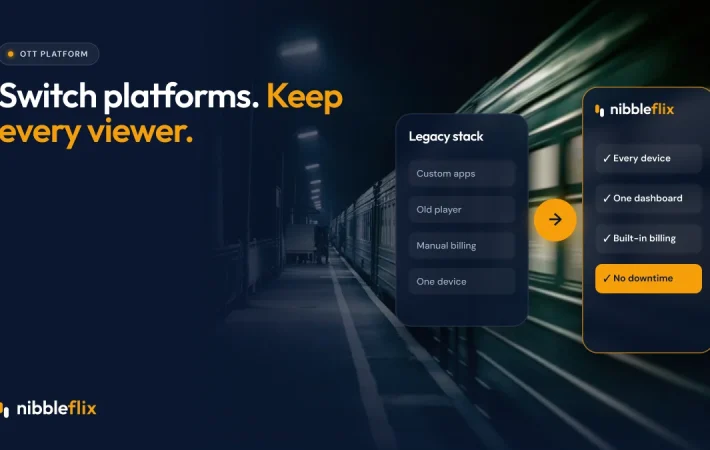
If you already run a service, check that the provider can move you from an in-house or legacy platform while keeping integrations and avoiding viewer downtime. Learn more about platform migration.
Data ownership and compliance
Your viewer data is one of the most valuable assets you build. Make sure you can access and export it, and that the platform supports your obligations, such as GDPR if you serve viewers in the EU. Data you own lets you run your own marketing, pricing tests and partnerships instead of depending on a third-party storefront.
Room to grow
Many services start with one model and add another later, such as a subscription library that adds a FAST channel or a short drama section. A platform that supports several models from one dashboard saves you a second migration down the road.
Questions to ask any white label OTT provider
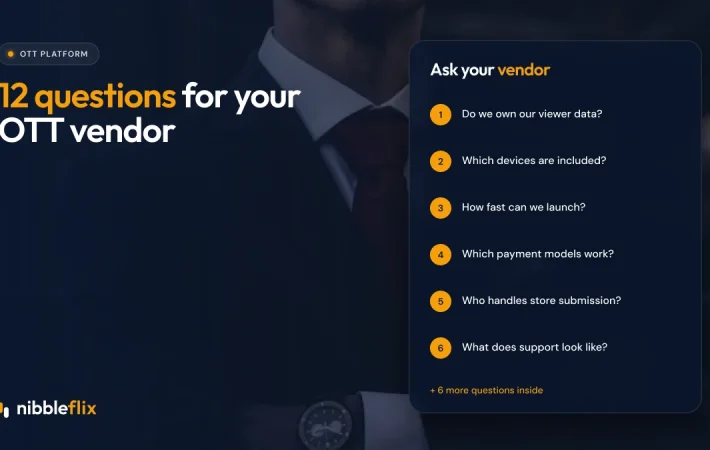
- Are the apps published under my developer account and brand?
- Who owns the viewer data, and can I export it?
- Which devices are included, and do TV apps cost extra?
- Which monetization models can I combine in one app?
- How long from sign-up to store submission?
- What launch support and ongoing support do I get?
- How does pricing scale as my audience grows?
How NibbleFlix approaches white-label OTT
NibbleFlix is a white label OTT platform built for four models on one platform: micro-drama, entertainment OTT, FAST channels and AI streaming. Your apps carry your brand and store listings, and your viewer data and revenue stay yours.
You can go from sign-up to App Store and Google Play submission in seven days, with no code and no in-house tech team, and launch support is included. One dashboard manages every app. If you want a step-by-step view, read how to launch an OTT app in 7 days.
Key takeaways
- A white label OTT platform gives you branded apps, video delivery, monetization and a CMS without building them.
- Buying is usually faster and lower risk than building for content-led businesses.
- Check device coverage, monetization flexibility, data ownership and migration support.
- Make sure the apps launch under your own brand and developer account.
Thinking about launching or replacing your streaming platform? Book a demo to see NibbleFlix in action.
Frequently asked questions
What does white label mean in OTT?
White label means the streaming technology is built by a provider but published entirely under your brand. Your name, logo and colors appear in the apps and store listings, and the provider stays invisible. You keep your viewer relationships, data and revenue, while the provider maintains the apps and infrastructure behind the scenes.
Is a white label OTT platform cheaper than building one?
For most content owners, yes. Building means hiring mobile, TV, backend and video engineers and maintaining every app indefinitely. A white label OTT platform spreads those costs across many customers, so you pay a predictable fee and put your budget into content, marketing and growing your audience.
Can I move from my current platform to a white label one?
Yes. Good providers support migration from in-house or legacy platforms. NibbleFlix handles migration while keeping your existing integrations and avoiding viewer downtime, so subscribers continue watching while the new branded apps go live and your team switches over to the new dashboard.
Which devices should a white label streaming platform support?
At minimum iOS, Android and web. Most services also need smart TV apps, since much long-form viewing happens on the big screen. NibbleFlix covers iOS, Android, responsive web, PWA, Apple TV, Android TV, Amazon Fire TV, Roku, Samsung and LG from one content dashboard.