
In this article
- Why FAST channel revenue is worth chasing
- How FAST CPM works
- What pushes CPMs up or down
- FAST ad sales: who sells your inventory
- Why server-side ad insertion matters
- FAST distribution: getting your channel watched
- Typical deal structures
- How to grow FAST channel monetization
- Launching FAST channels with NibbleFlix
- Key takeaways
- Frequently asked questions
- How do FAST channels make money?
- What affects FAST CPM rates?
- Should I sell FAST ads myself?
- Can I run a FAST channel in my own app?
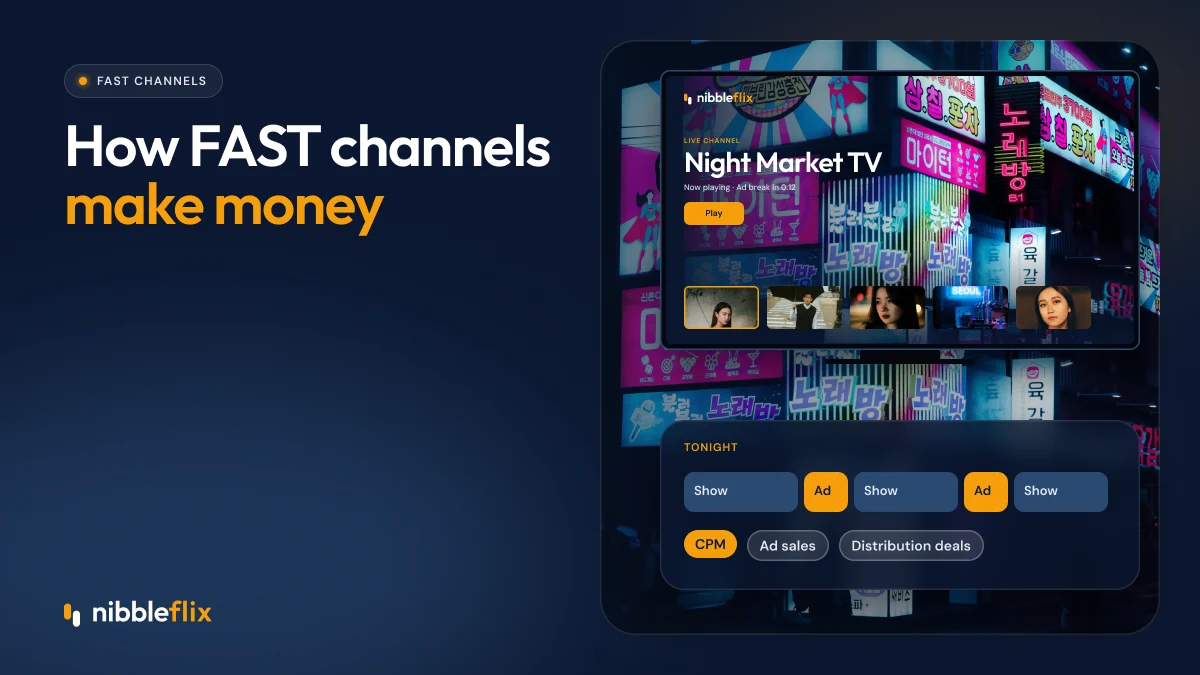
FAST channels look free to viewers, so where does the money come from? FAST channel monetization rests on three pillars: the ads that run inside your streams, who sells those ads, and the distribution deals that put your channel in front of viewers.
The direct answer: FAST channels make money by selling ad impressions at a CPM (cost per thousand views), either through their own sales, programmatic exchanges, or the distribution platform, and splitting that revenue according to the distribution deal.
This guide explains each part of the FAST revenue chain and what content owners can do to earn more from every hour watched.
Why FAST channel revenue is worth chasing
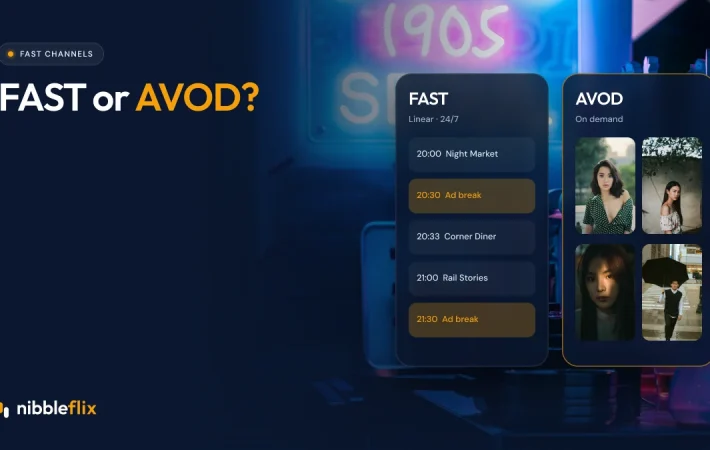
FAST (free ad-supported streaming TV) delivers linear, scheduled channels over the internet, mostly on connected TVs. Viewers get a familiar lean-back experience without paying, and advertisers get TV-style audiences with digital targeting.
The market is large and spreading. Omdia forecasts global FAST revenue of US$12 billion in 2027. The US accounts for over 80% of that, but Omdia sees a US$1.6 billion opportunity outside the US by 2027, led by markets such as the UK, Canada, Australia, Germany and Brazil.
Europe is growing too. The valantic and FUNKE State of TV and Video 2026 FAST Special puts European FAST revenue at €1.34 billion in 2025, with a forecast of €3.04 billion in 2030.
How FAST CPM works
Almost all FAST revenue comes from ads. Advertisers pay a CPM, the price for one thousand ad impressions. Your revenue is driven by a simple chain:
- Viewing hours: how many people watch and for how long.
- Ad load: how many minutes of ads you run per hour.
- Fill rate: the share of ad breaks that are actually sold.
- FAST CPM: the price each sold impression earns.
- Revenue share: what you keep after the platform and sales partners take their cut.
What pushes CPMs up or down
- Market: US CPMs are generally higher than in most other regions, while European and Latin American CPMs vary by country.
- Genre: premium genres such as news, sport, food and lifestyle often attract stronger advertiser demand.
- Audience data: better targeting options usually mean higher prices.
- Seasonality: ad prices tend to rise around the end-of-year holidays and drop early in the year.
Viewers are generally open to the trade. The same valantic study found 71% of DACH connected-TV users accept ads in exchange for free content.
FAST ad sales: who sells your inventory
There are three main ways your ad breaks get sold. Most channels use a mix.
| Sales route | How it works | Pros | Cons |
|---|---|---|---|
| Platform-sold | The distributor sells ads in your channel | No sales team needed | Lower revenue share for you |
| Programmatic | Ads sold automatically through exchanges and SSPs | Scales easily, global demand | Lower CPMs than direct deals |
| Direct sales | Your team sells to advertisers and agencies | Highest CPMs, brand partnerships | Needs sales staff and scale |
New channels usually start with platform-sold or programmatic inventory and add direct sales once viewing hours justify a sales effort. Local direct sales can work well in markets like Germany, Spain or Brazil where advertisers want local-language audiences.
Why server-side ad insertion matters
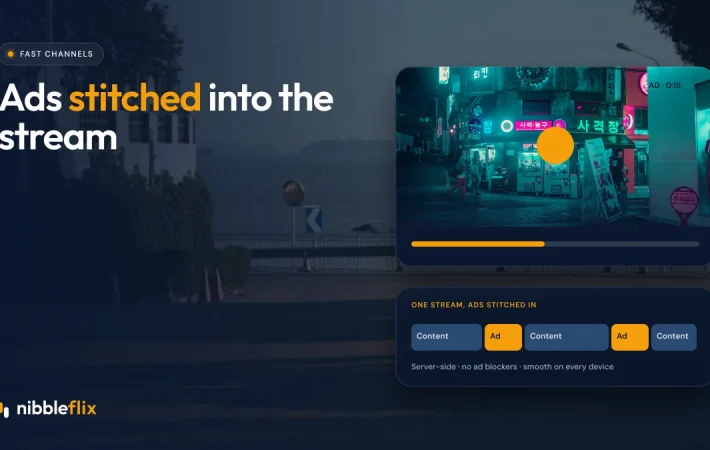
Server-side ad insertion (SSAI) stitches ads directly into the video stream. This makes ads play smoothly like TV, reduces the impact of ad blockers, and enables accurate impression reporting. Without SSAI, it is hard to earn premium CPMs. Our explainer on server-side ad insertion covers the details.
FAST distribution: getting your channel watched
Revenue only flows if viewers find your channel. FAST distribution can take several forms:
- Aggregator platforms: FAST services that host many channels in one guide.
- TV maker platforms: channels built into smart TV interfaces.
- Your own apps: a branded app where you control the experience and keep more of the ad revenue.
Typical deal structures
Distribution deals usually follow one of two patterns. In an inventory split, you and the platform each get a share of the ad breaks to sell. In a revenue share, one party sells all the ads and splits the money. Terms vary widely, so compare who sells, who reports, and how payments are calculated before signing.
Running your own branded app alongside third-party distribution is a strong hedge. You keep first-party data, control the guide placement, and can add on-demand content next to your linear channels.
How to grow FAST channel monetization
Once you are live, focus on the levers you control:
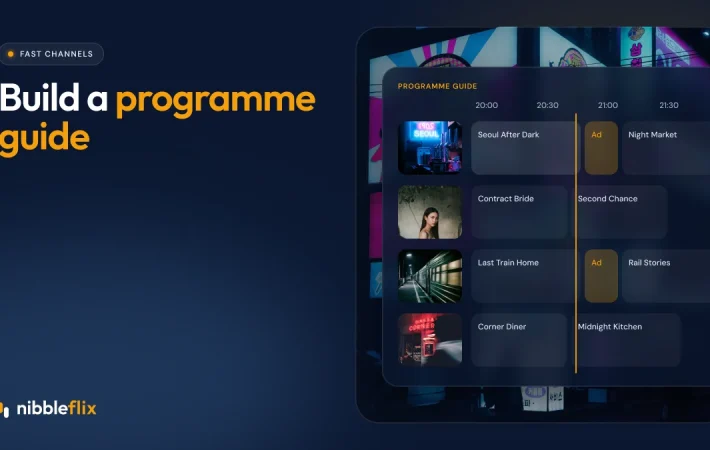
- Increase watch time with a well-built EPG schedule, consistent themes and blocks that keep viewers tuned in.
- Refresh programming so returning viewers see new content.
- Localize with AI subtitles and AI dubbing to launch versions for new markets.
- Improve metadata so platforms and viewers can find your channel.
- Test ad load carefully. More ads can raise short-term revenue but reduce viewing hours.
For the basics of getting started, read what a FAST channel is and how to launch one.
Launching FAST channels with NibbleFlix
NibbleFlix includes the FAST tools you need, EPG and server-side ad insertion, plus branded apps for iOS, Android, web and smart TVs including Apple TV, Android TV, Amazon Fire TV, Roku, Samsung and LG. You can combine linear channels with on-demand content and other monetization models in one app. See the FAST channels solution and the full list of monetization options.
Key takeaways
- FAST channel monetization depends on viewing hours, ad load, fill rate, CPM and revenue share.
- Ads can be sold by the platform, programmatically or directly, and most channels mix all three.
- SSAI is essential for a TV-like ad experience and accurate reporting.
- Distribution deals decide who sells ads and how revenue is split.
- Your own branded app gives you more control and more of the revenue.
Planning a FAST channel? Book a demo and see how EPG, SSAI and branded TV apps work together.
Frequently asked questions
How do FAST channels make money?
FAST channels earn revenue by selling ads inside their linear streams. Advertisers pay a CPM for every thousand impressions. The money is shared between the channel owner, the distribution platform and any sales partners, according to the distribution deal. Watch time and ad pricing are the main drivers.
What affects FAST CPM rates?
CPMs depend on the market, the genre, the quality of audience data and the time of year. The US usually pays more than other regions, and premium genres attract stronger demand. Server-side ad insertion and accurate measurement also help channels command better prices from advertisers.
Should I sell FAST ads myself?
Most new channels start with platform-sold or programmatic ads because they need no sales team. Direct sales usually earn higher CPMs, but they only make sense once you have enough viewing hours and a clear audience that advertisers want to reach, often in a specific country or niche.
Can I run a FAST channel in my own app?
Yes. A branded app lets you control the viewing experience, keep first-party data and retain more ad revenue. Many content owners run their own app alongside third-party FAST platforms to reach more viewers while building a direct relationship with their audience.